Leonid Meteor Shower Reaches Peak: How and When to Watch
The annual Leonid meteor shower reaches its peak overnight on November 17–18, offering skywatchers up to 15 brilliant meteors an hour as Earth passes through a cometary debris stream.
In this piece
The Leonid meteor shower is set to peak during the night of November 17–18, producing up to 10 to 15 meteors per hour under dark skies. Radiating from the…
The annual Leonid meteor shower reaches its peak this week, presenting skywatchers with an opportunity to observe one of autumn's most anticipated astronomical displays. Forecasters expect the celestial event to achieve maximum activity overnight between November 17 and November 18. Observers situated under optimal viewing conditions may spot between 10 and 15 shooting stars each hour across the night sky.
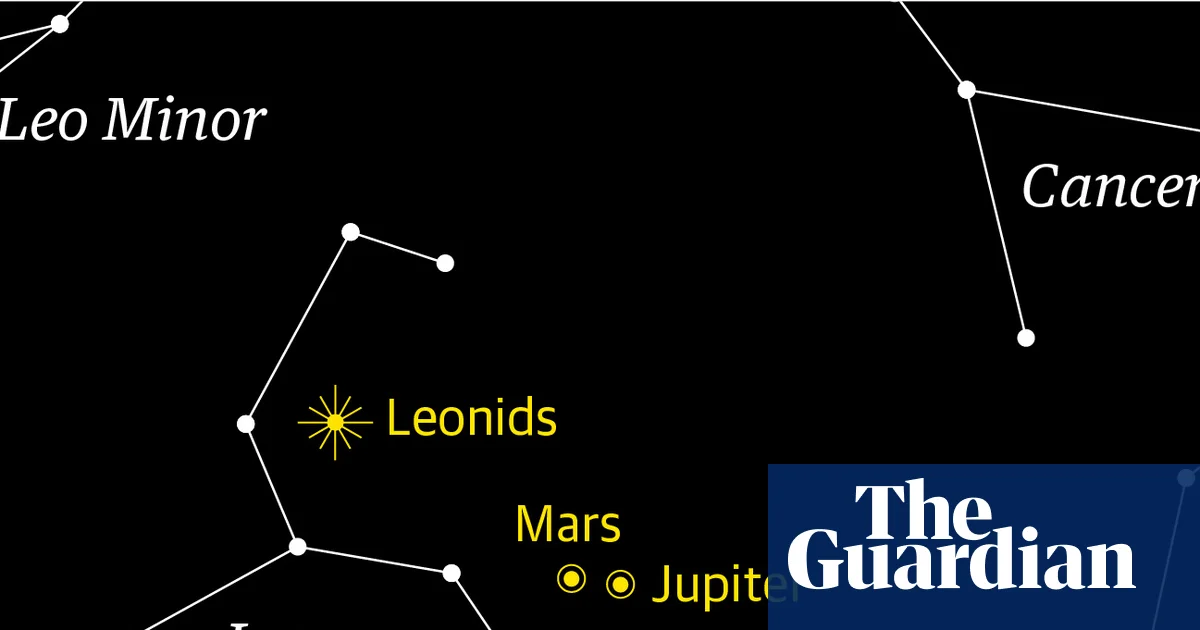
The celestial show appears to radiate from the constellation of Leo, situated in the eastern sky. This apparent point of origin, known to astronomers as the radiant, is primarily an effect of perspective as Earth travels through space. Viewers looking eastward will see the meteors seemingly streak outward from this distinctive stellar backdrop.
The event occurs each year when Earth crosses a dense stream of debris shed by a comet during its recurring orbit around the sun. As our planet sweeps through this cosmic particle trail, fragments of cometary debris collide with the upper atmosphere. The resulting friction causes the material to vaporize at extreme altitudes, creating brief and luminous trails of light visible from the ground.
While an hourly rate of 10 to 15 meteors represents a relatively modest frequency compared to heavier showers on the astronomical calendar, the Leonids are renowned for their visual impact. What the display lacks in sheer volume, it typically makes up for in individual brilliance. Many of the streaks leave bright, memorable impressions that linger in the dark sky far longer than average shooting stars.
Capturing the peak of the shower depends heavily on local weather and viewing conditions. Astronomers and experienced skywatchers emphasize the necessity of finding locations well away from artificial light and dense urban glow. In heavily lit environments, fainter streaks are easily washed out, making rural locations and designated dark-sky areas ideal for counting meteors.
Stargazers planning to step outside do not require specialized astronomical equipment like telescopes or high-magnification binoculars. Because meteors can streak rapidly across broad expanses of the atmosphere, wide-angle naked-eye observation provides the most effective view. Allowing the eyes roughly twenty to thirty minutes to adjust to ambient darkness significantly enhances the ability to detect fainter trails.
The orientation of the constellation Leo in the eastern sky means viewing conditions typically improve as the night progresses. As the constellation climbs higher above the eastern horizon in the hours after midnight, the atmospheric window for spotting meteors widens. Observers facing eastward in the pre-dawn hours are often positioned to witness the clearest activity before morning twilight begins.
For amateur astronomers and casual observers alike, the Leonids remain a cherished annual tradition on the stargazing calendar. Documenting the frequency and brightness of shooting stars during peak activity provides a direct visual connection to the orbital mechanics of our solar system. The fleeting flashes serve as an accessible reminder of the constant dynamic interactions between Earth and interplanetary debris streams.
As the peak window on November 17 and 18 passes, meteor activity will gradually taper off while Earth exits the comet debris stream. Skywatchers hoping to catch the display are encouraged to monitor local cloud forecasts and dress warmly for extended nighttime viewing sessions. Even a brief period under clear, dark skies can yield a glimpse of these brilliantly luminous autumn streaks.
Primary source: The Guardian Science. Newzly rewrites and structures source reporting for clarity; verify critical details at the original.