NASA APOD Listing Highlights an M-Class Solar Flare
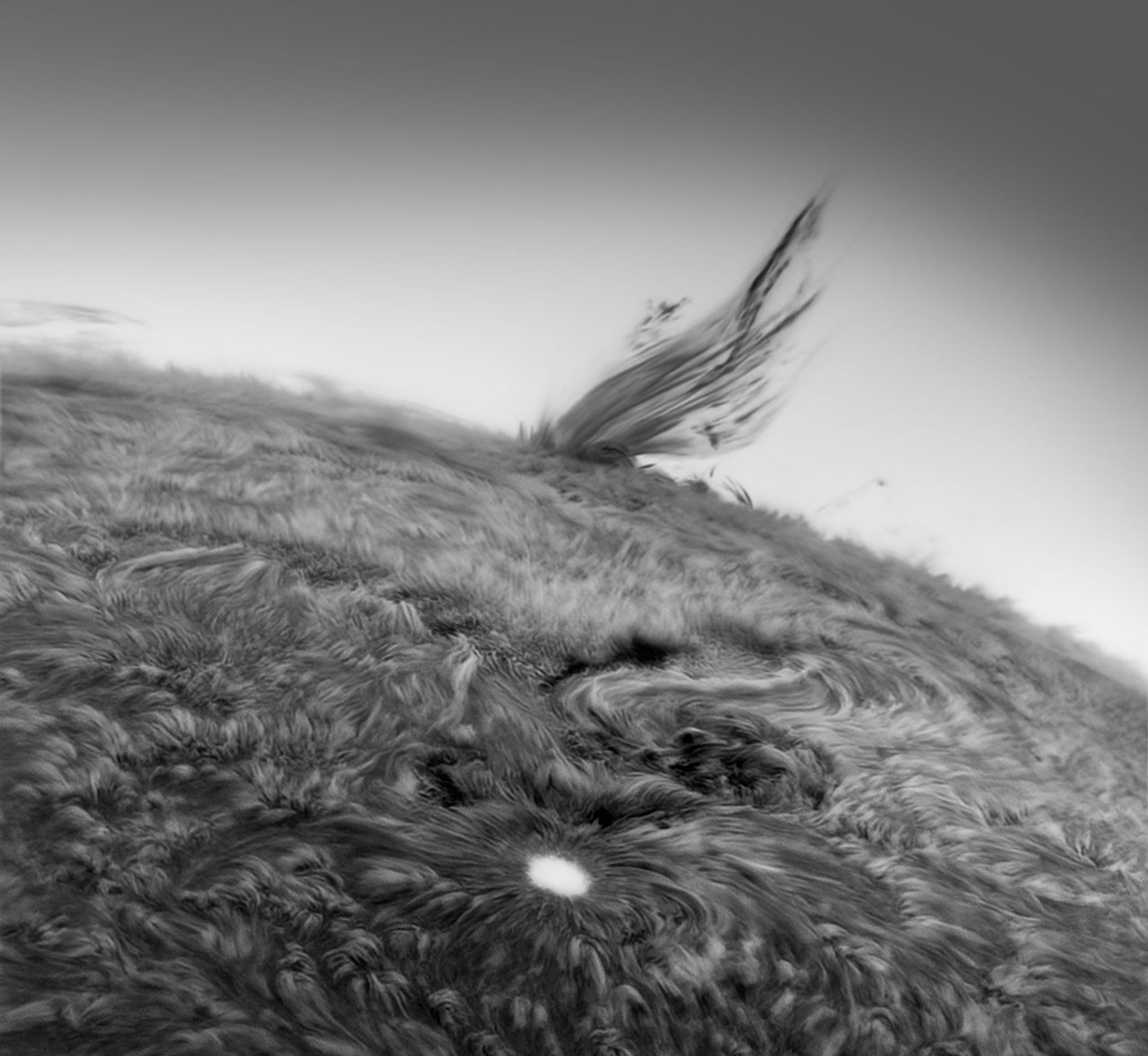
A NASA Astronomy Picture of the Day listing dated November 18, 2026, highlights an M-class solar flare, though the supplied excerpt omits the image’s scientific explanation and observation details.
In this piece
A NASA Astronomy Picture of the Day entry identifies an M-class solar flare as its subject. The supplied material contains mostly navigation text, leaving the…
A NASA Astronomy Picture of the Day listing dated November 18, 2026, identifies an M-class solar flare as its featured subject. The supplied headline names the event, but the accompanying excerpt cuts off before providing a substantive explanation of the image or the circumstances surrounding the observation.
The entry appears within Astronomy Picture of the Day, known as APOD, which presents a different astronomical image or photograph each day. Its introductory text describes the feature as a way to explore the universe through pictures accompanied by brief explanations written by professional astronomers. That explanatory material is not included in the supplied extract.
Most of the available text consists of the website’s navigation, including links to its archive, calendar, educational material and discussion area. The only additional descriptive fragment begins “A Medium-Sized” before ending abruptly. Consequently, the excerpt supports identifying the subject as an M-class solar flare but not reconstructing the account that accompanied it.
The distinction between an entry’s publication label and an observation date is important when interpreting this material. Although November 18, 2026, appears in the title, the excerpt does not say when the flare was observed. It also does not identify an observing instrument, a spacecraft, an observatory or the person or organization credited with producing the image.
The supplied material likewise contains no account of the flare’s location on the Sun, its duration or its development. It offers no measurements beyond the classification named in the headline. Without the missing explanation, a more detailed description of what the image depicts would go beyond the information available in the source extract.
For readers concerned about possible effects on Earth, the listing alone does not establish a connection to any disruption or warning. No impact assessment, forecast or advisory appears in the supplied text. The headline should therefore be read as identifying the subject of an astronomy feature, rather than as evidence of a current hazard or an operational space-weather alert.
The entry’s stated purpose is educational: APOD pairs a visual subject with an astronomer’s explanation to help readers understand what they are seeing. Here, the missing explanation limits that opportunity. The title supplies a starting point, but the excerpt does not provide enough information to explain why this particular flare or image was selected for the feature.
The full APOD entry would be needed to establish the image’s provenance, observation timing and intended scientific context. Until that material is available, the supported account remains narrow: NASA’s listing highlights an M-class solar flare, while the details necessary for a fuller report are absent from the supplied excerpt.
Primary source: NASA Breaking News. Newzly rewrites and structures source reporting for clarity; verify critical details at the original.