NASA tests Mars helicopter rotor blades at supersonic speeds
NASA has tested Mars helicopter rotor blades at supersonic speeds, with a reported potential lift increase of 30% that could support heavier scientific payloads and more ambitious aerial exploration.
In this piece
NASA has successfully tested Mars helicopter rotor blades at supersonic speeds, according to ScienceDaily. The reported advance could increase potential lift by…
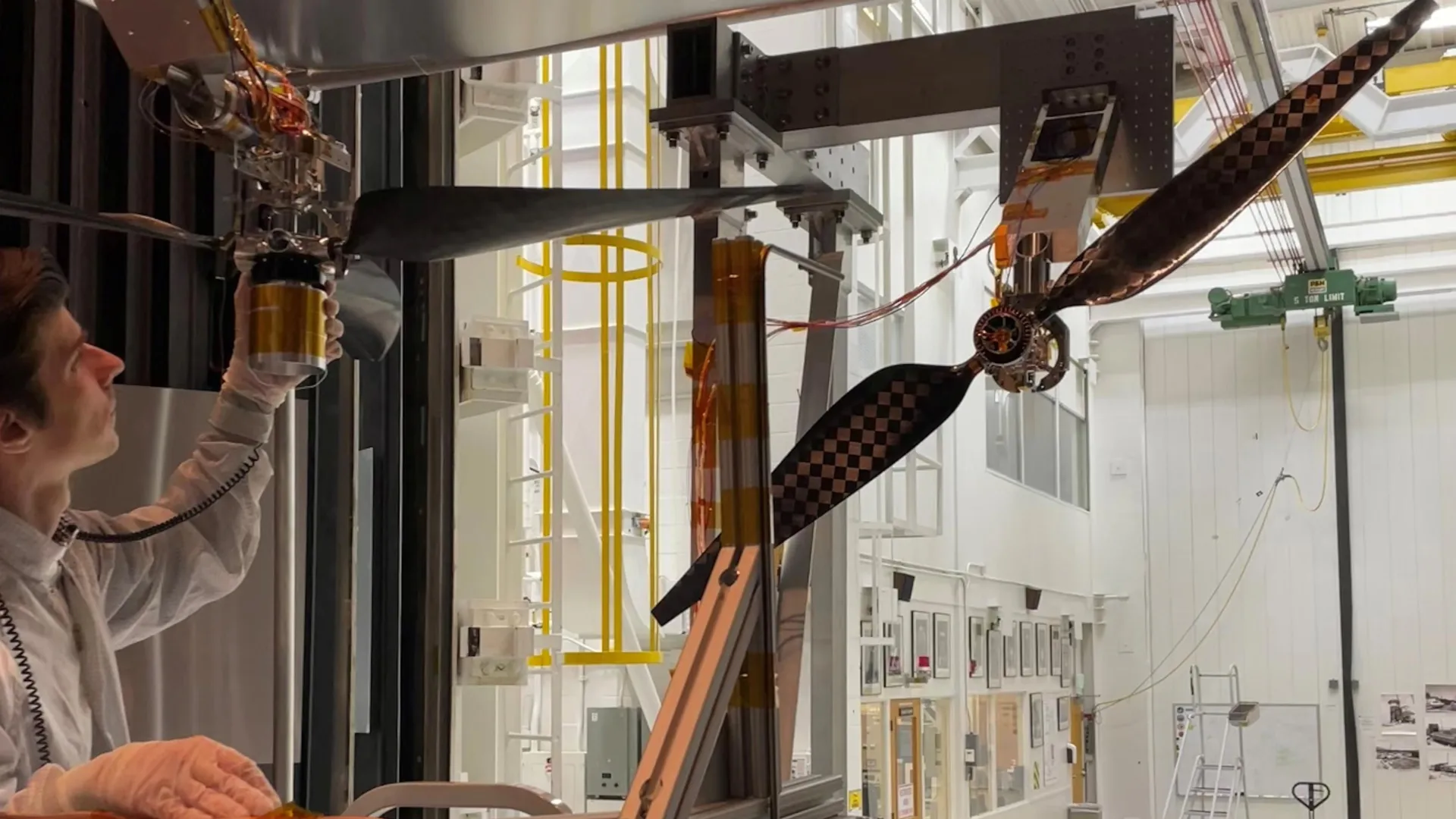
NASA has successfully tested Mars helicopter rotor blades at supersonic speeds, an advance that could help make future aircraft more capable on the Red Planet, according to ScienceDaily. The report describes a potential lift increase of 30%, offering a path toward helicopters able to carry heavier scientific equipment.
The result addresses what the report calls a major obstacle to developing more powerful Mars aircraft. Its significance lies in the possibility of expanding what a helicopter can carry and where it can travel, rather than in a reported flight by a new aircraft on Mars.
The distinction between potential lift and demonstrated mission performance is important. The supplied account reports a successful blade test, but does not establish that a complete helicopter has achieved a 30% improvement during flight. It also does not specify the conditions or baseline used to calculate that potential gain.
Greater lift could allow a next-generation helicopter to carry heavier scientific instruments, one of the possibilities highlighted in the report. That would broaden the equipment available for aerial investigation, although the account does not identify particular instruments or describe a selected payload. The scientific benefit would depend on how future aircraft put the additional capability to use.
The report also points to the prospect of longer flights. More capable helicopters could potentially extend the area available for exploration, but the supplied material gives no flight-distance estimate or endurance target. The blade result therefore signals an engineering opportunity rather than a measured increase in the range of an operational aircraft.
Access is another potential advantage. ScienceDaily says future helicopters could explore locations beyond the reach of traditional rovers, making aerial vehicles a way to investigate terrain that ground-based machines cannot reach. The account does not name any proposed destinations, so that possibility remains a broad exploration goal rather than a specific mission plan.
Several details needed to assess the advance more fully are absent from the supplied report. It does not provide blade dimensions, rotational speeds, test duration or a description of the testing environment. Without those details, the result cannot be used on its own to establish the performance, readiness or operating limits of a future Mars helicopter.
The next question is how the reported blade capability could translate into an aircraft designed for scientific exploration. No development timetable or flight mission is identified in the supplied account. For now, ScienceDaily frames the successful test as a step toward more powerful Mars helicopters, with heavier payloads, longer flights and wider access remaining potential outcomes.
Primary source: ScienceDaily. Newzly rewrites and structures source reporting for clarity; verify critical details at the original.