National Conference MP says party will follow INDIA bloc on delimitation Bills
Chowdry Mohammad Ramzan said National Conference will follow the INDIA bloc on delimitation Bills, warning that a larger House could leave northern India with far more seats than other regions.
In this piece
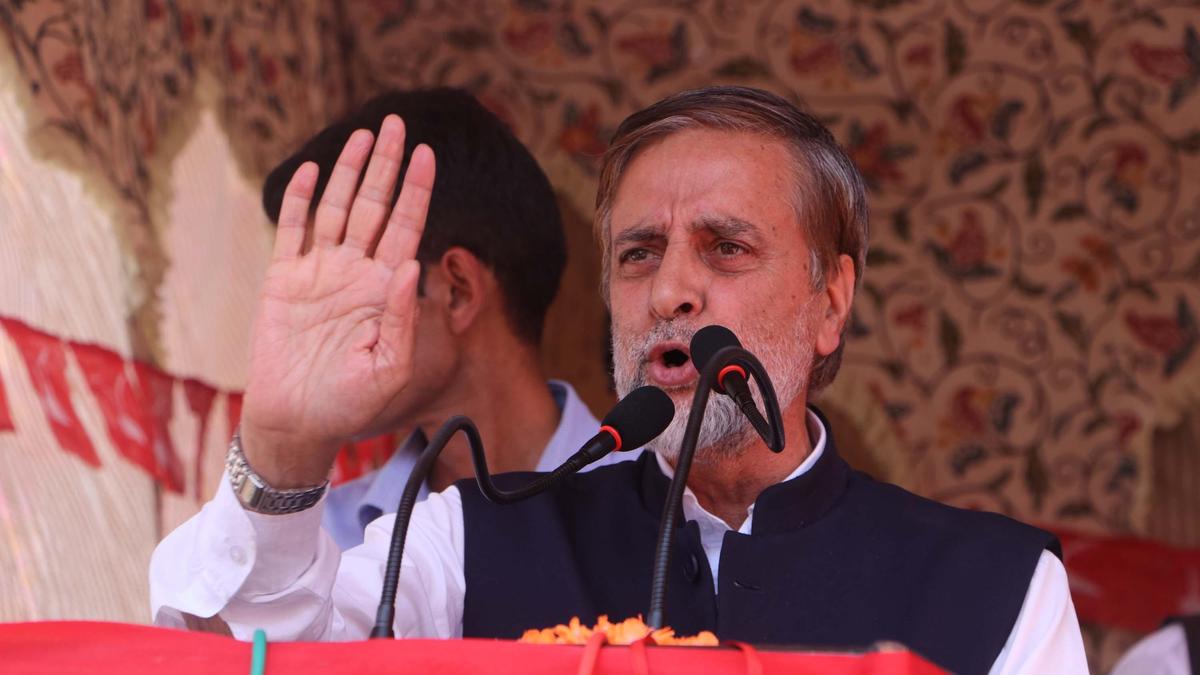
National Conference MP Chowdry Mohammad Ramzan said the party will follow the INDIA bloc on delimitation Bills. He said plans to raise the House above its…
National Conference MP Chowdry Mohammad Ramzan has said his party will follow the INDIA bloc on delimitation Bills, linking that stand to fears that a larger Parliament would concentrate seats in northern India.
Ramzan said the intention to increase the current strength of 540 seats has sparked apprehensions that around 600 seats will go to North India and 200 to other regions. He presented those figures as a political fear arising from the proposed expansion, not as a published allocation of constituencies.
Delimitation is the process of redrawing constituency boundaries and, when the Lok Sabha is resized, of deciding how many seats each state and region receives. The constitutional aim is that representation should track population so that members speak for broadly comparable numbers of people.
For decades, the allocation of Lok Sabha seats among states has been frozen so that states which slowed population growth would not lose relative representation to states where population rose faster. Any move to lift that freeze and enlarge the House reopens a federal argument over whether headcount alone should decide political weight.
The split Ramzan cited — roughly three northern seats for every one elsewhere — is the sharpest version of that argument. Parties outside the high-population north have long warned that a formula based only on current population would reward faster growth and reduce the leverage of states that invested earlier in health and education.
National Conference, a Jammu and Kashmir party and a member of the opposition INDIA bloc, has indicated it will not set an independent line on the Bills. For a region with a small population beside the largest northern states, an expanded House allocated mainly by population would not by itself increase its share of the national legislature.
The stakes go beyond map-drawing. The number of constituencies assigned to each region shapes coalition arithmetic, campaign geography, and the bargaining power of smaller states in the years after the next general election. A redistribution on the scale described in Ramzan’s remarks would alter that balance for a full parliamentary term and beyond.
His comments also show delimitation being treated as a question of opposition coordination. By pledging to follow the INDIA bloc, Ramzan placed National Conference with allies who have framed the Bills as a test of federal fairness, while the precise formula and timetable remain for Parliament to settle.
The public account of his remarks does not include a state-by-state seat table, an official reply to the 600-and-200 split, or a scheduled vote. Those numbers should be read as the apprehension he voiced, not as a notified distribution of seats.
What happens next depends on Parliament and on the census and delimitation process required for any lawful redraw. Until a formula is placed on the record and debated, parties are marking positions: proponents of a larger House on one side, and INDIA bloc partners, including National Conference, on the risk that the additional seats will be unevenly shared.
Primary source: The Hindu. Newzly rewrites and structures source reporting for clarity; verify critical details at the original.