Nats chief calls himself UK's ‘most disliked person’ after flight chaos
Martin Rolfe joked about his unpopularity after September’s air traffic control failures, while an independent review examines the disruption and the resilience of Britain’s aviation systems.
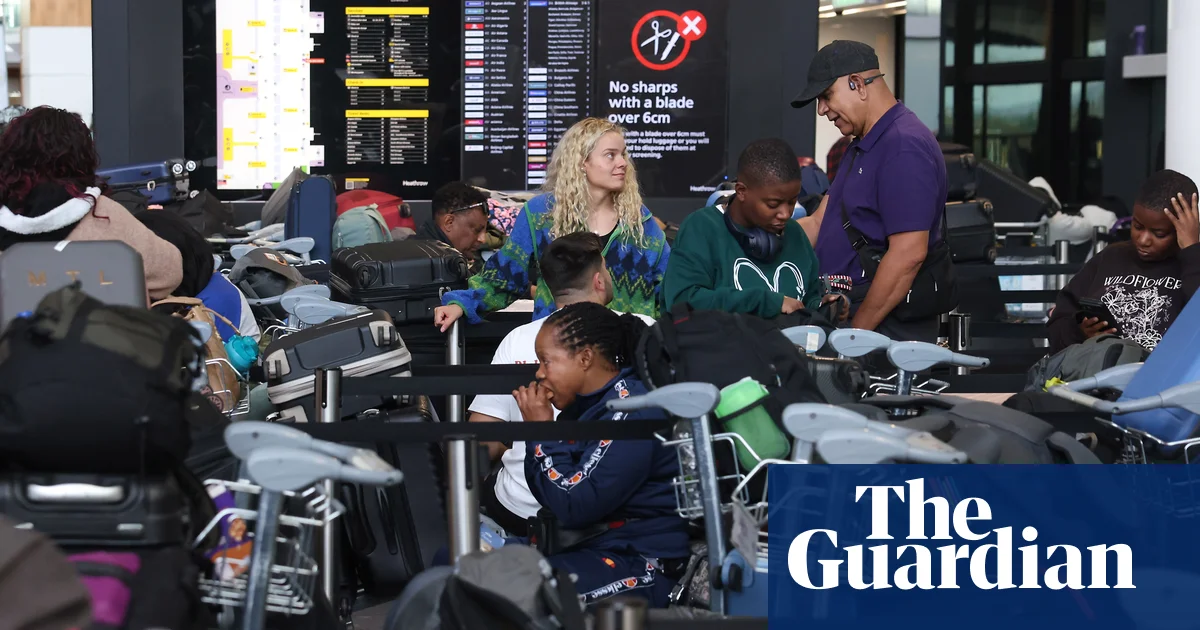
Nats chief executive Martin Rolfe has described himself as “the most disliked person in the UK” after two air traffic control failures in September disrupted flights for hundreds of thousands of passengers. Speaking at an aviation industry conference, he also made light of calls from Ryanair’s chief executive for him to resign, according to the Guardian.
Rolfe introduced himself to delegates by linking his public profile to the travel chaos. The Guardian reported that he said he had enjoyed ignoring the resignation demands, placing his response to airline criticism at the centre of his remarks.
The comments come amid an independent examination of the disruption, commissioned by Transport Secretary Heidi Alexander. The Civil Aviation Authority has set out an investigation that goes beyond the immediate technical fault to consider whether Britain’s air traffic management arrangements are sufficiently resilient.
In its preliminary account of the 8 September incident, Nats identified a software defect affecting the allocation of aircraft identification codes. It said a paused request failed to resume correctly, corrupting output and affecting subsequent flight data updates used by controllers.
Nats said the reduced information available to controllers required restrictions on air traffic to maintain safety. Although the fault affected its London Area Control operation, restrictions were imposed across the UK so the system could be restarted and flight information reloaded.
Those restrictions lasted about six hours, according to Nats, but the consequences for travellers continued after its operations returned to normal that evening. The organisation said clearing the passenger disruption took more than two days, illustrating the gap between restoring a technical service and recovering flight schedules.
The CAA said more than 2,000 flights were delayed, cancelled or diverted during the 8 September incident. That measure captures several forms of disruption rather than cancellations alone, an important distinction when assessing the scale of the event and its consequences for passengers.
The regulator’s review will examine Nats’s plans to renew and modernise critical operational systems, alongside business continuity arrangements. It will also assess implementation of recommendations from earlier reviews and the effectiveness of the CAA’s own oversight, extending scrutiny beyond the organisation’s leadership.
The inquiry will draw on other comparable events, including the second September failure, and consider international lessons on resilience and recovery. Its scope makes the central question broader than identifying a software defect: investigators will assess what additional safeguards and organisational changes may be needed.
The CAA plans to engage airlines, airports, passenger groups and Nats as its work proceeds. An initial report is due to the transport secretary by the end of January 2027, followed by a final report by 8 March, providing the next formal assessment of the failures and the response.
Primary source: The Guardian Business. Newzly rewrites and structures source reporting for clarity; verify critical details at the original.