Shoppers welcome traffic-free Oxford Street as bus diversions draw concern
Oxford Street’s pedestrianised section has won praise from shoppers enjoying more room, while bus rerouting and pressure on neighbouring roads highlight the trade-offs facing London’s retail transformation.
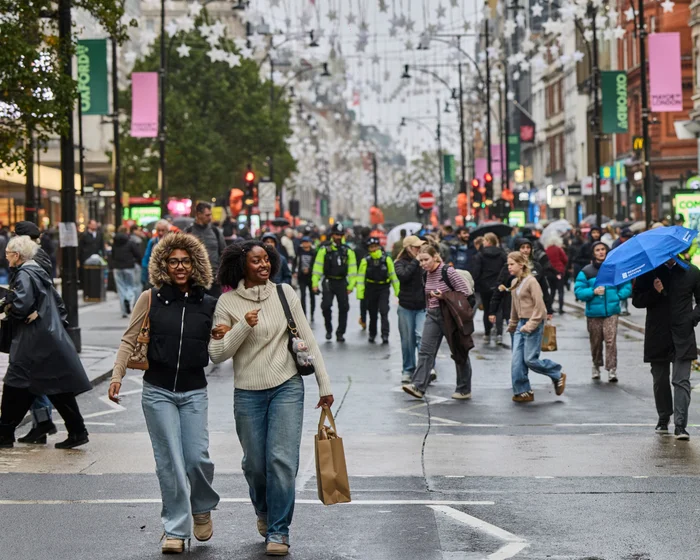
Shoppers have welcomed the pedestrianisation of part of London’s Oxford Street, praising the additional room to walk and browse despite disruption from diverted buses. The Guardian’s account of the opening describes a sharp contrast between crowded streets near Oxford Circus and the newly available walking space beyond temporary bollards.
The change took effect on Monday 26 October, removing traffic from almost a kilometre between Orchard Street and Great Portland Street, according to the Oxford Street Development Corporation. It marks the beginning of a wider transformation rather than the completion of the street’s new public spaces.
In the scene described by the Guardian, red buses turned away before reaching the pedestrianised section, while people on surrounding pavements competed for space. Beyond the barriers, a green welcome banner marked the traffic-free area, where pedestrians could spread out across the road instead of remaining confined to the pavements.
Many shoppers considered the inconvenience of bus rerouting an acceptable exchange for that extra space, the newspaper reported. But its account also noted dissatisfaction, underlining that a more comfortable shopping environment does not necessarily mean an easier journey for everyone using the district.
Transport for London introduced associated bus changes from 24 October. Its published arrangements include services terminating at Marble Arch and alterations to routes and stops, meaning passengers may need to check where their usual service now picks up or finishes.
The immediate challenge is therefore wider than keeping vehicles out of the shopping street. The development corporation says diverted traffic on nearby roads will be monitored, making the operation of surrounding streets an important part of assessing whether the new arrangements work effectively.
The launch comes ahead of the Christmas shopping period, a timing the development corporation explicitly linked to its phased approach. Initial construction was intended to be limited, allowing the street to open to pedestrians before more extensive improvements were introduced.
Further changes announced by the corporation include more than 50 trees, over 100 seats, two public squares, rest areas and improved signage. Those additions are planned as part of the continuing transformation in 2027, rather than features shoppers should expect to find fully delivered at the opening.
The temporary design also gives authorities an opportunity to observe how the space is used before refining permanent improvements. The corporation says feedback will include residents, accessibility groups, businesses and workers, alongside other stakeholders, so the assessment is intended to extend beyond shoppers’ first impressions.
For now, the opening offers an early indication of the benefits and practical tensions involved in reallocating road space. The next stage will test whether the enthusiasm for more walking room can be matched by workable transport arrangements nearby, with the corporation expecting a transitional scheme to be in place by the end of spring 2027.
Primary source: The Guardian Business. Newzly rewrites and structures source reporting for clarity; verify critical details at the original.