culture·California·Los Angeles County
Peacock Debuts Archaeological Workplace Comedy 'Dig' Starring Amy Poehler
Amy Poehler and Michael Schur reunite for 'Dig,' a Peacock workplace comedy set on a Greek excavation that blends academic satire with real-world field research dynamics.
In this piece
Peacock has released all ten episodes of 'Dig,' an archaeological comedy co-created by Amy Poehler and Michael Schur based on Kate Myers' novel 'Excavations.'…
Peacock has officially released its new comedy series "Dig," an archaeological workplace satire developed by Amy Poehler and Michael Schur that transports viewers to an excavation site in Greece. Based on author Kate Myers' 2023 novel "Excavations," all ten episodes arrived on the streaming platform on November 23. The project marks a high-profile reunion for the creative duo, who previously collaborated on the long-running television comedy "Parks and Recreation."
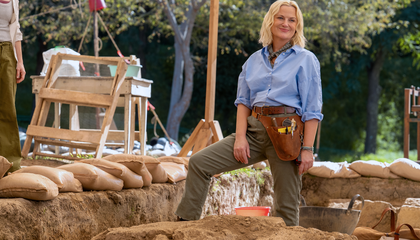
The series stars Poehler as Elise, a dedicated second-in-command researcher tasked with overseeing the day-to-day operations of an American university-sponsored dig. Elise spends her days managing camp logistics and ambitious junior researchers while waiting out the reluctant retirement of her eccentric supervisor, Neville, played by Hugh Laurie. Her character must navigate institutional bureaucracy and interpersonal tensions that mirror the everyday realities of academic life.
The camp's routine shifts dramatically when Elise and three female colleagues uncover a monumental, exceptionally preserved ancient statue deep beneath the Greek soil. The discovery represents a once-in-a-generation triumph that promises to transform their careers and secure the dig's future. However, the celebratory atmosphere quickly unravels when the group realizes the rare artifact has unexpectedly ensnared them in a dangerous international conspiracy.
Alongside Poehler and Laurie, the ensemble cast features Geraldine Viswanathan, Antonia Thomas, and Fina Strazza portraying the diverse crew of researchers at the site. Poehler originally discovered Myers' debut novel and brought the concept to Schur, envisioning an archaeological trench as a fertile setting for a character-driven workplace comedy. The production aims to balance sharp comic timing with a genuine appreciation for the collaborative environment of Mediterranean field research.
In a review of the show's premises, archaeological experts consulted by Smithsonian Magazine examined how closely the televised depiction reflects actual field methods. Researchers pointed out that discovering an intact, pristine classical sculpture is exceedingly rare in the modern era of the discipline. Real-world digs spend the vast majority of their seasons unearthing mundane pottery sherds, organic remains, and fragmented architectural foundations rather than museum-grade treasures.
Despite the dramatic embellishment of an intact masterwork, specialists affirmed that the series accurately captures the communal atmosphere and unglamorous grind of fieldwork. Archaeological campaigns require researchers to endure intense Mediterranean heat, dust, and close living quarters alongside rotating crews of university students. The interpersonal frictions and deep bonds formed during long weeks in the dirt serve as an authentic foundation for the show's comedic situations.
Creators Poehler and Schur intentionally designed the show to push back against classic cinematic archetypes of solo adventurers like Indiana Jones. Rather than portraying archaeology as an action-packed treasure hunt, the storyline highlights the labor-intensive reality of trench mapping, artifact logging, and academic grant disputes. This focus on institutional teamwork allows the series to honor the communal nature of scientific inquiry while subverting traditional Hollywood tropes.
The debut of the series also arrives at a notable cultural moment for the humanities, providing rare mainstream entertainment exposure for classical archaeology. Observers note that humanistic disciplines have faced declining university funding and waning public awareness in recent decades. By pairing accessible comedy with real historical themes, the program introduces audiences to the rigorous preservation efforts that safeguard global heritage.
With all ten episodes now streaming on Peacock, critics and viewers are assessing whether the show's unique blend of mystery and workplace humor will resonate widely. Audiences have responded to the chemistry of the core ensemble, while academic communities have welcomed the lighthearted celebration of their field. The series ultimately frames archaeology as an enduring human pursuit defined by curiosity, collaboration, and the shared quest to understand the past.
Primary source: Smithsonian History. Newzly rewrites and structures source reporting for clarity; verify critical details at the original.