Police Deployed During Stand-Off Over Control of Top Poland Court
Police cordoned off Poland's Constitutional Tribunal in Warsaw after the government suspended two top judges and sought criminal charges, triggering fierce protests and an escalating constitutional standoff.
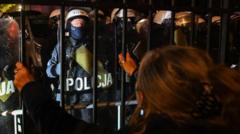
Polish police deployed riot units around the Constitutional Tribunal in Warsaw following a dramatic confrontation over the leadership of the country's top court. The move came after authorities moved to enforce the suspension of two senior judges, sparking fierce resistance from conservative opposition figures and their supporters.
Inside the court, designated senior justice Anna Korwin-Piotrowska announced a one-month suspension of Tribunal President Bogdan Swieczkowski and Vice-President Bartlomiej Sochanski. The action followed mounting disputes over the tribunal's refusal to seat newly appointed judges selected by the current parliamentary majority.
Adding legal weight to the confrontation, Justice Minister and Prosecutor-General Waldemar Zurek formally requested that the tribunal lift the immunity of both top judges. Prosecutors are seeking to press criminal charges against Swieczkowski and Sochanski for alleged dereliction of duties and obstructing judicial appointments.
Outside the tribunal building, tensions boiled over as Law and Justice (PiS) politicians and party supporters rallied at the cordoned entrance. Protesters and opposition leaders, including PiS chairman Jaroslaw Kaczynski, gathered in the streets, describing the police presence and administrative actions as an unconstitutional takeover.
Swieczkowski firmly rejected the suspension, insisting that he remains the lawful head of the Constitutional Tribunal. He characterized the government's intervention as an illegal coup d'etat aimed at seizing control of the judicial branch, vowing to contest any attempts to unseat him.
The standoff highlights an enduring dispute between the centrist government led by Prime Minister Donald Tusk and institutional loyalists linked to the previous PiS administration. Since taking office, Tusk's coalition has pledged to dismantle judicial changes implemented between 2015 and 2023, which European courts had previously criticized for undermining judicial independence.
Tusk defended the enforcement actions, describing them as difficult but necessary steps to restore legal integrity to a deeply compromised institution. The prime minister argued that the tribunal had become heavily politicized under the prior administration and could not continue functioning as a partisan redoubt against democratically enacted legislation.
The rapidly unfolding crisis prompted Polish President Karol Nawrocki to cut short an official state visit to Senegal. Nawrocki ordered his flight back to Warsaw immediately to address the standoff, signaling the gravity of the constitutional impasse between the presidency and the government.
The crisis deepens institutional deadlock across Poland, threatening to paralyze the nation's highest court for constitutional review. With both factions claiming legal legitimacy and neither backing down, legal scholars warn that conflicting rulings could undermine the enforceability of national laws and investor confidence.
In the coming days, the dispute is expected to test both Poland's domestic legal framework and its standing with European Union institutions. While prosecutors press forward with their demands to lift judicial immunity, all eyes remain on President Nawrocki and the tribunal's fractured bench as both sides navigate an unprecedented institutional showdown.
Primary source: BBC World. Newzly rewrites and structures source reporting for clarity; verify critical details at the original.