Privy Council Overturns Trinidad and Tobago Anti-Homosexuality Laws
In a historic victory for Caribbean human rights, the London-based Privy Council has struck down colonial-era laws criminalizing consensual same-sex relations in Trinidad and Tobago, ending an 11-year legal challenge.
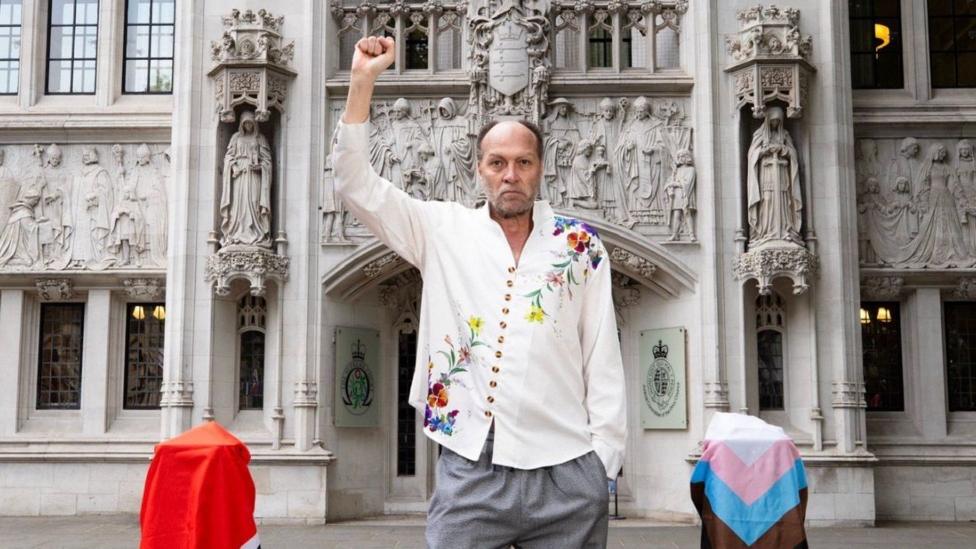
The Judicial Committee of the Privy Council has overturned Trinidad and Tobago's laws criminalizing consensual same-sex sexual activity, concluding a landmark constitutional challenge. The ruling by the nation's final court of appeal brings to an end an 11-year legal effort spearheaded by dual British-Trinidadian activist Jason Jones.
The judgment invalidates statutory provisions rooted in British colonial rule that had long penalized intimate relations between consenting adults. Under the contested sections of the country's Sexual Offences Act, individuals convicted of prohibited intimacy faced severe penalties, including lengthy prison sentences.
Jones initiated his constitutional challenge in 2018, arguing that sections 13 and 16 of the Sexual Offences Act breached fundamental protections enshrined in the national constitution. His petition contended that the statutes violated fundamental rights to privacy, equality before the law, and freedom from state-sanctioned discrimination.
In 2018, the High Court of Trinidad and Tobago ruled in favor of Jones, declaring the provisions unconstitutional and of no legal effect. That initial decision was celebrated by international human rights monitors and regional civil society groups, though it prompted strong pushback from conservative and faith-based organizations across the island.
The litigation took an unexpected turn when the state appealed the initial High Court verdict. In March 2025, Trinidad and Tobago's Court of Appeal reversed the ruling, determining that a constitutional savings clause shielded pre-independence laws from judicial invalidation, effectively reinstating the criminal penalties.
Following that appellate reversal, Jones escalated the proceedings to the Judicial Committee of the Privy Council in London, which serves as Trinidad and Tobago's court of last resort. The panel of law lords examined whether constitutional savings clauses could indefinitely insulate legislation that curtails basic human rights.
In its final decision, the Privy Council rejected the appellate court's interpretation and held that criminal prohibitions on private, consensual adult intimacy are fundamentally incompatible with constitutional freedoms. The panel affirmed that such measures cannot withstand modern constitutional scrutiny or principles of personal autonomy.
Civil rights organizations and legal experts have hailed the ruling as a monumental victory for equality in the Caribbean. For decades, advocacy groups have maintained that retaining colonial-era statutes created an environment of fear, vulnerability, and systemic discrimination for sexual minorities.
The decision is widely anticipated to influence ongoing legal debates across the Commonwealth Caribbean, where several countries still retain similar colonial-era legislation. Legal scholars anticipate that the Privy Council's precedent will offer substantial momentum to parallel challenges pending before other regional courts.
With all avenues of judicial appeal now exhausted, attention turns toward the broader social and administrative adjustments necessary to enact the ruling. Community advocates note that while the legal victory is decisive, sustained institutional dialogue and public education will be required to eliminate deep-seated social stigma.
Primary source: BBC World. Newzly rewrites and structures source reporting for clarity; verify critical details at the original.