world·Delhi·New Delhi District
Violence Erupts Across Bangladesh as Supporters of Ousted PM Sheikh Hasina Stage Protests
Supporters of ousted Bangladeshi leader Sheikh Hasina have clashed with police during protests demanding her return from India, leaving at least one person dead and reigniting nationwide political tensions.
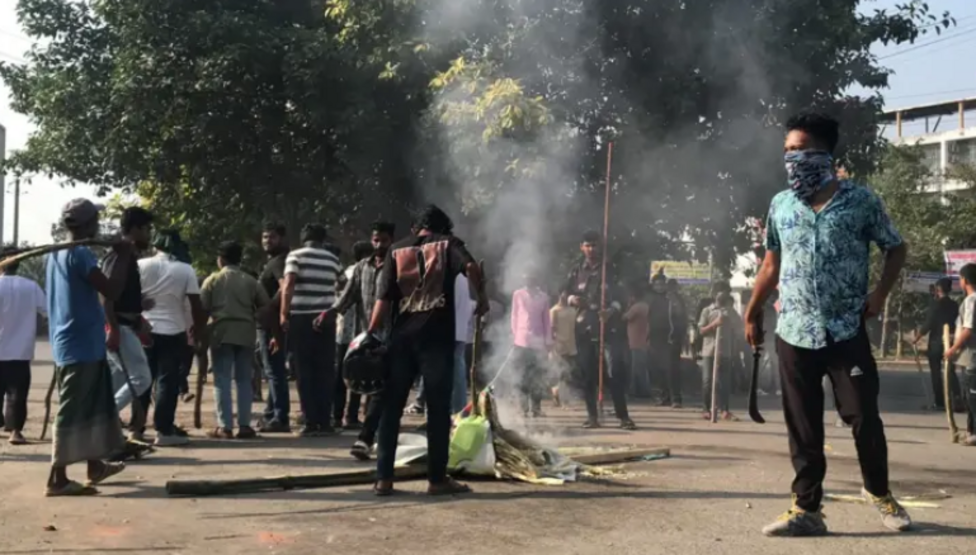
Clashes broke out across parts of Bangladesh as loyalists of ousted Prime Minister Sheikh Hasina staged demonstrations demanding her return from exile. Security personnel deployed tear gas and rubber bullets to disperse gathering crowds after rallies disrupted major thoroughfares and transit routes.
The demonstrations turned violent in several regional pockets, leading to arson and street confrontations. Protesters set up barricades with burning tires and targeted vehicles, with at least one bus driver reported killed after his vehicle was set ablaze during the unrest.
In Gopalganj district, long recognized as a traditional stronghold of Hasina's political base, demonstrators clashed directly with law enforcement. Protesters reportedly set fire to a police vehicle as tensions mounted, prompting authorities to reinforce security checkpoints across the area.
The unrest followed reports that Hasina, who fled to India following a student-led uprising in August 2024, formally applied for travel documents. Hasina reportedly approached the Bangladesh high commission in New Delhi to request a new passport and national identity card to facilitate an eventual return home.
The interim administration in Dhaka swiftly condemned the protests and warned against any coordinated effort to destabilize the country. Officials cautioned that law enforcement would not tolerate unlawful disruptions or cross-border attempts to orchestrate political unrest inside Bangladesh.
Hasina stepped down and fled to neighbouring India following weeks of deadly nationwide student demonstrations against government job quotas that evolved into a wider movement against her 15-year rule. Her departure ushered in an interim government tasked with restoring civil order, instituting institutional reforms, and stabilizing the economy.
The former prime minister faces dozens of criminal cases, including serious charges related to the deaths of hundreds of demonstrators during the July and August crackdowns. Interim authorities have repeatedly signaled their intention to seek her extradition and ensure accountability through domestic legal proceedings.
Supporters of Hasina's Awami League party and its associated student wing have faced rigorous surveillance and severe restrictions since the change in administration. Many senior party figures have been detained or driven into hiding, making coordinated public mobilizations exceptionally rare and fraught with confrontation.
Hasina's extended stay in India has also placed strain on diplomatic relations between New Delhi and Dhaka. Indian authorities have maintained a measured stance while hosting the former leader, even as Bangladesh's caretaker leadership urges cooperation regarding pending investigations and legal requests.
Security forces remain on heightened alert in major cities and regional districts to prevent further unrest. With public sentiment deeply polarized and legal proceedings moving forward against former regime figures, the political climate in Bangladesh continues to face significant uncertainty.
Primary source: BBC World. Newzly rewrites and structures source reporting for clarity; verify critical details at the original.