Rare Nanotyrannus skeleton heads to New York auction
A rare Nanotyrannus skeleton is heading to auction with an estimate starting around £4.5 million, renewing debate over whether scientifically important fossils should remain in public collections.
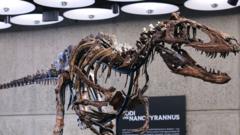
A rare Nanotyrannus skeleton is heading to auction in New York with an estimate starting at approximately £4.5 million, bringing the commercial fossil trade back into the scientific spotlight. Sotheby’s will offer the specimen, nicknamed Jodi, on October 27 with an estimated value of $6 million to $9 million.
The auction house describes Jodi as one of only three such skeletons known to science, with a virtually complete skull. The sale follows research that challenged the longstanding interpretation of small tyrannosaur-like fossils as young Tyrannosaurus rex rather than a separate dinosaur.
According to Sotheby’s, rancher Jodi Pierson discovered the skeleton on her land in Garfield County, Montana, in 2019. It was excavated by commercial palaeontologist Clayton Phipps in the Hell Creek Formation, which preserves remains from the final chapter of the dinosaurs’ history.
Sotheby’s dates the specimen to approximately 67 million years ago and says Nanotyrannus lived alongside T. rex. Its account highlights longer forelimbs, larger hand claws and more teeth as features distinguishing the smaller predator from its much larger contemporary.
That scientific background gives the auction significance beyond its price. Specimens capable of helping researchers distinguish between young animals and separate kinds of dinosaur can influence how ancient ecosystems are reconstructed, making their long-term availability an important consideration.
The Society of Vertebrate Paleontology opposes the commercial sale of scientifically significant vertebrate fossils unless the transaction places or keeps them in public trust. Its ethics policy calls for important specimens and their accompanying information to be preserved in institutions responsible for scientific study and education over the long term.
The concern is not simply whether a skeleton can be seen in a display case. In a previous appeal to an auction house, the society argued that researchers must be able to re-examine and remeasure fossils, sometimes decades after their discovery, to verify scientific conclusions. Access offered by a private owner cannot necessarily be guaranteed for future researchers.
The Natural History Museum in London also identifies high auction prices as a barrier for public institutions. Its account of the fossil trade explains that buying expensive skeletons can compete with spending on staff, facilities and research, while even a specimen loaned for public display may later become unavailable for study.
The museum nevertheless acknowledges contributions made by commercial collectors, including improvements in fossil collection techniques. That makes the issue broader than a simple division between people who discover fossils and scientists who study them: the central question is how discoveries can remain available for lasting scientific and educational use.
Jodi is being offered after a public viewing at Sotheby’s New York headquarters ahead of the auction. The sale will establish what a buyer is willing to pay, but the specimen’s future scientific role will depend on where it ultimately resides and whether researchers retain dependable access.
Primary source: BBC Science. Newzly rewrites and structures source reporting for clarity; verify critical details at the original.