Second Federal Judge Blocks Trump's Arch, Pointing to Weak Legal Merits
A federal judge in Virginia announced she will issue a preliminary injunction blocking Donald Trump's planned arch, delivering a second courtroom defeat after finding the project is unlikely to prevail on its legal merits.
In this piece
A second federal judge has halted construction on Donald Trump's proposed arch, stating the initiative is unlikely to succeed in court. The Virginia judge's…
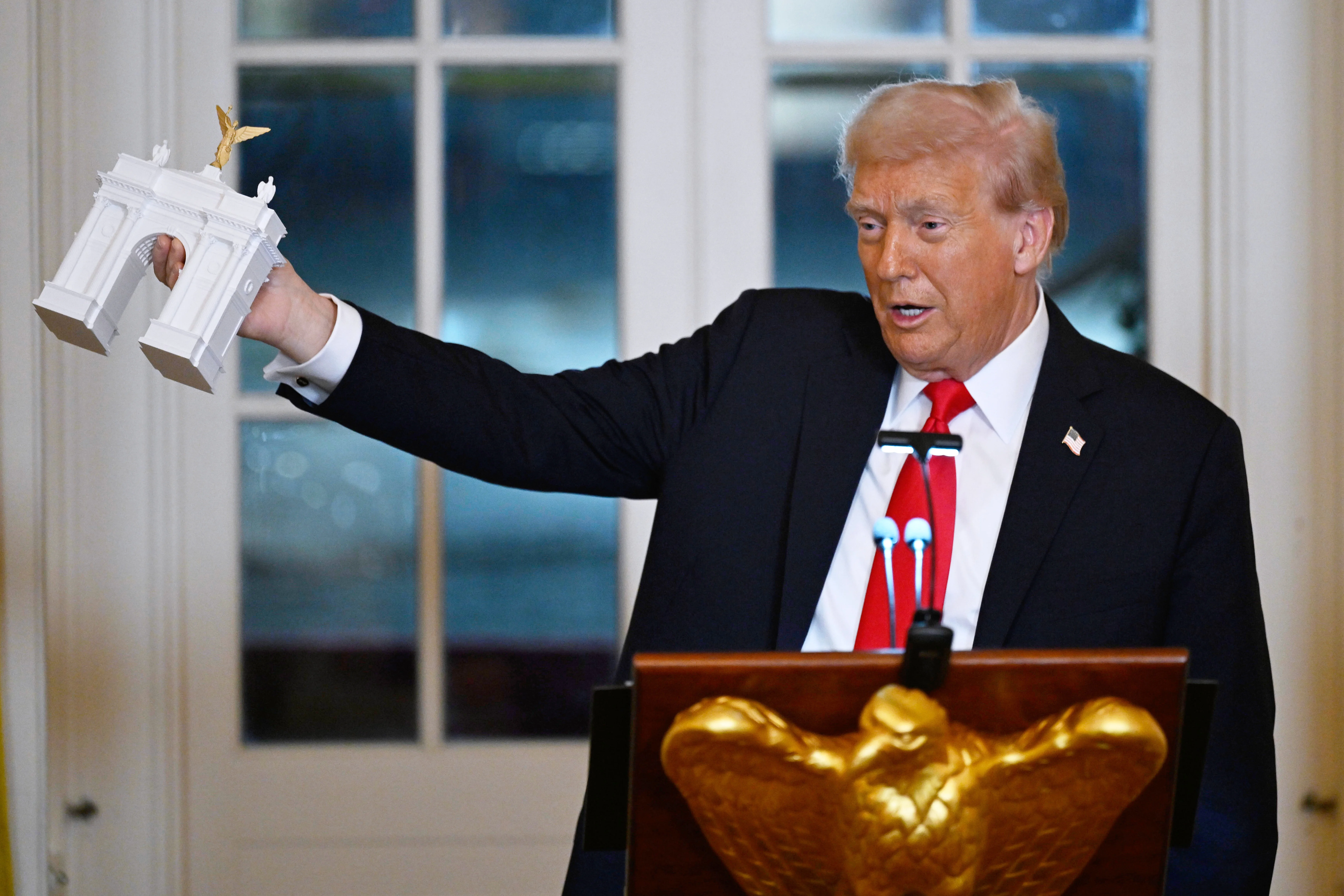
A federal judge in Virginia has announced plans to issue a preliminary injunction halting construction of Donald Trump's proposed arch, delivering another significant legal blow to the controversial monument. The decision escalates existing court interventions against the structure and signals deep judicial skepticism regarding the legal authority behind the project. By moving toward a preliminary injunction, the court is imposing a more durable pause on building efforts while ongoing litigation proceeds.
The move by the Virginia judge represents the second formal judicial action against the arch in the span of just days. Earlier in the week, a federal judge in Washington, D.C., stepped in to temporarily block preliminary construction work. While the earlier ruling provided an immediate freeze, the Virginia court's forthcoming injunction goes a step further in curbing development activities over an extended timeline.
Central to the Virginia judge's determination is the assessment that the project is unlikely to succeed in court when evaluated on its merits. Under federal civil procedure, securing a preliminary injunction requires plaintiffs to establish a strong probability of prevailing in the underlying lawsuit. By explicitly noting that defense arguments are unlikely to withstand judicial review, the court placed a high legal hurdle in front of the monument's proponents.
Preliminary injunctions serve as vital legal safeguards designed to maintain the status quo and prevent irreparable harm before a full trial or final determination can occur. Unlike brief temporary restraining orders that primarily offer emergency relief for days or weeks, an injunction typically remains in effect throughout substantive proceedings. That extended duration prevents any irreversible ground-breaking or structural alterations while complex constitutional or administrative questions are weighed.
The emergence of parallel legal battles across neighboring federal jurisdictions underscores the broad opposition facing the arch project. With judges in both Virginia and the District of Columbia now intervening, opponents have established a coordinated and formidable courtroom defense. Dual courtroom setbacks complicate any immediate momentum and force project coordinators to defend their plans simultaneously on separate judicial fronts.
The rulings highlight the critical checks and balances exercised by the federal judiciary over contentious public works and executive initiatives. When major architectural or symbolic structures face challenges concerning statutory authority, environmental clearance, or land use compliance, federal courts routinely scrutinize the legal foundations closely. The initial rulings suggest that the legal justification supporting the arch may rest on fragile statutory or regulatory grounds.
On the ground, the back-to-back rulings effectively freeze logistical planning, site preparations, and capital commitments tied to the monument. Contractors and development partners face substantial operational uncertainty whenever federal judges restrict site activity. Prolonged court injunctions frequently lead to mounting project costs, scheduling disruptions, and heightened public scrutiny as proceedings drag on.
Looking ahead, the issuance of the formal preliminary injunction will open a new phase of intense legal maneuvering between the opposing parties. Legal representatives for the project may seek an emergency stay or appeal the decisions to federal appellate courts in hopes of lifting the restrictions. Until higher courts weigh in or a final judgment is rendered, however, construction on the disputed arch remains firmly stalled.
Primary source: NPR News. Newzly rewrites and structures source reporting for clarity; verify critical details at the original.