Trump Threatens Heavy Tax on US Tech Firms Building AI Data Centres Abroad
President Donald Trump warned American technology companies they could face a tremendous tax if they build AI data centres overseas, urging domestic communities to welcome rather than block facilities.
In this piece
U.S. President Donald Trump has warned American tech companies they could face severe tax penalties if they construct AI data centres overseas. While…
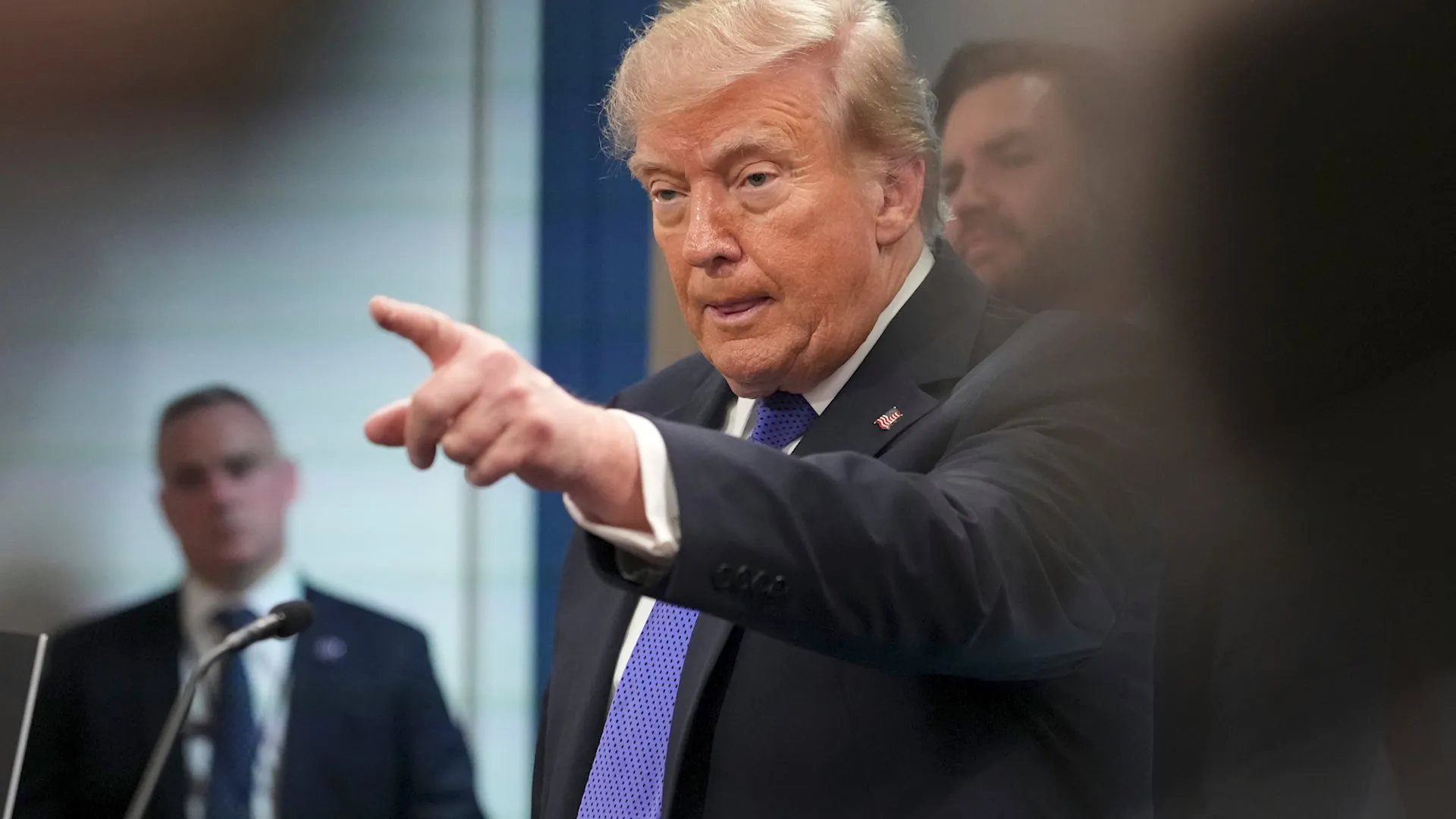
U.S. President Donald Trump has warned that American technology firms could face steep financial penalties if they construct artificial intelligence data centres overseas rather than on domestic soil. Speaking during a press briefing, Trump asserted that companies opting to establish their advanced computing infrastructure outside the United States should expect to pay what he described as a tremendous tax. The remarks, reported by Al Jazeera and other news outlets, mark an aggressive effort to pressure tech leaders to keep critical computational capital within the country.
Despite the stern warning, Trump acknowledged that formal policy mechanisms for such a levy have not yet been developed. He admitted to reporters that he had not worked out the operational details of the proposed penalty, nor had he coordinated the initiative in advance with key economic or technology officials in his administration. The absence of specific regulatory or legislative text leaves significant uncertainty regarding how any cross-border infrastructure tax would be structured or enforced.
The proposal comes as the administration seeks to cement American dominance in the rapidly accelerating artificial intelligence sector. Trump framed the retention of data centre projects as a vital matter of national economic strength and technological leadership. By threatening financial disincentives for offshore development, the president aims to ensure that computational capacity, proprietary algorithms, and high-tech employment remain concentrated inside the United States.
The push to expand domestic data infrastructure, however, coincides with escalating tensions across numerous American communities. Municipalities and local residents have increasingly pushed back against proposed hyperscale facilities, raising alarms over their immense electricity consumption and heavy strain on regional power grids. In several regions, local planning boards have delayed or rejected data centre proposals over concerns that massive power draws could drive up consumer utility bills and crowd out other civic needs.
Beyond energy demands, opponents of domestic data centre proliferation have cited significant environmental and neighborhood disruptions. The facilities require millions of gallons of water annually for evaporative cooling systems, raising alarms in areas vulnerable to drought. Residents living near proposed sites have also protested against continuous background noise generated by industrial cooling fans and backup diesel generators, intensifying community resistance.
Addressing this grassroots pushback, Trump urged local jurisdictions not to reject incoming data centre investments. Instead of blocking construction, the president recommended that municipal leaders use the tech industry's immense demand for physical footprint as leverage. He advised communities to negotiate direct financial payments, infrastructure contributions, or community dividends from developers to offset the local burdens of hosting the massive server farms.
For major technology corporations, expanding data operations internationally has become a practical necessity driven by bottlenecks at home. Facing tight electrical interconnection queues and scarce power availability in North America, leading cloud providers have explored investments across Europe, the Middle East, and Asia. A punitive tax on foreign facilities could disrupt global expansion strategies and force firms to balance expensive domestic power upgrades against high financial penalties abroad.
Industry observers and legal analysts note that turning the president's verbal warning into enforceable policy would require substantial legislative action or complex executive authority. Trade experts have also cautioned that penalizing overseas corporate facilities could trigger reciprocal measures or complicate international digital trade agreements. For now, tech executives and local governments are closely monitoring whether the administration introduces formal regulatory proposals or leaves the statement as a rhetorical negotiating tactic.
Primary source: Al Jazeera. Newzly rewrites and structures source reporting for clarity; verify critical details at the original.