Trump Defends Putin Ties, Insists AI Data Centers Remain in US
In a wide-ranging news conference reported by Al Jazeera, the U.S. president defended his relationship with Vladimir Putin, addressed Middle East hostilities, and warned that critical artificial intelligence data infrastructure must stay on American soil.
In this piece
During a broad press conference covered by Al Jazeera, the U.S. president defended his diplomatic engagement with Russian President Vladimir Putin and praised…
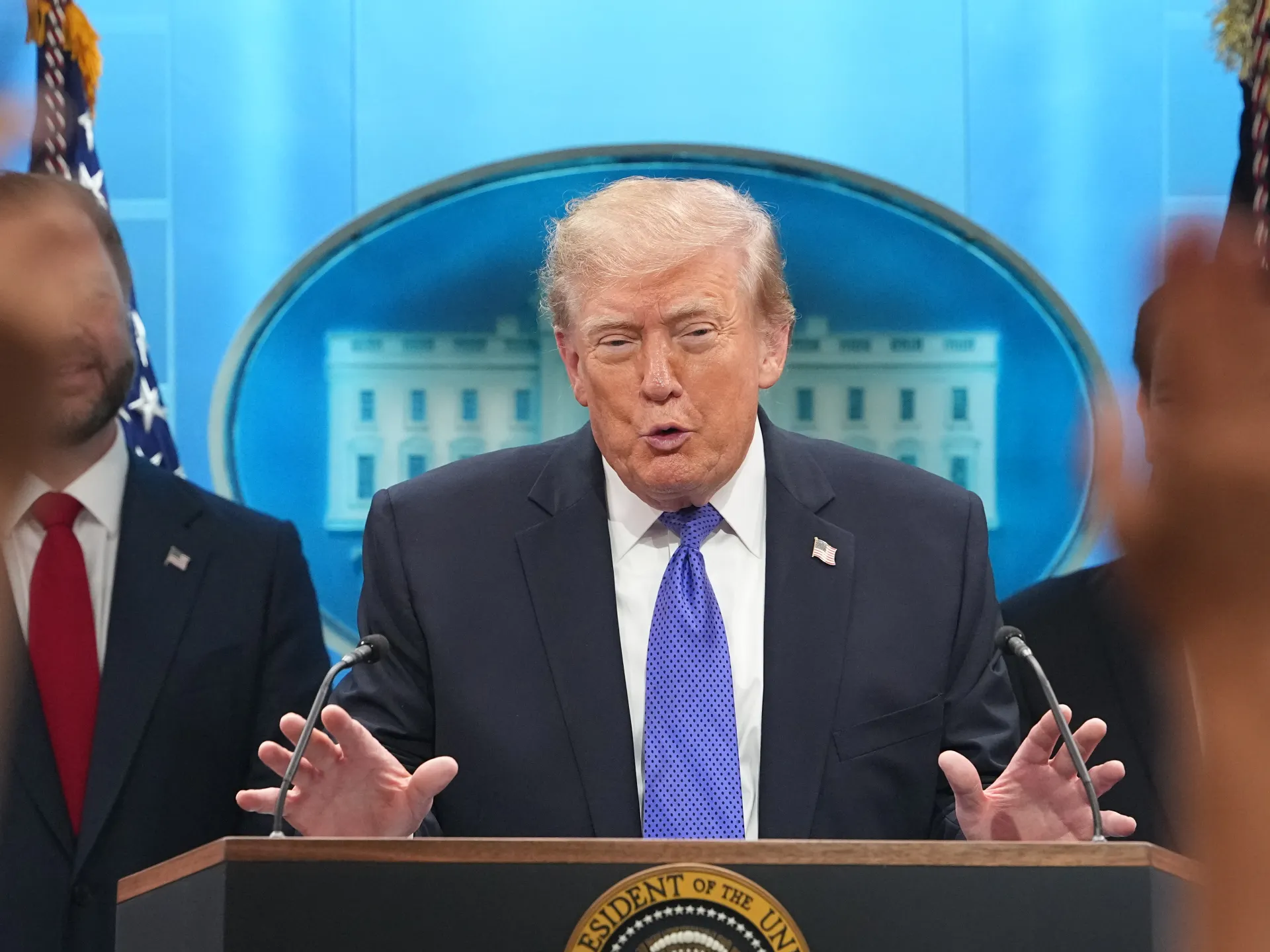
According to a report by Al Jazeera, U.S. President Donald Trump addressed a wide array of foreign policy and technological priorities during a broad news conference, speaking in defense of his relationship with Russian President Vladimir Putin while issuing an explicit warning that artificial intelligence data centers must remain within the United States. The remarks brought renewed focus to the administration's dual emphasis on personal diplomacy with foreign leaders and economic nationalism regarding emerging technology infrastructure.
During the briefing, Trump underscored the strategic necessity of keeping advanced computing facilities on American soil, signaling that the rapid development of artificial intelligence has become an issue of national security and industrial sovereignty. The directive regarding data centers reflects mounting concerns among policymakers that offshore tech infrastructure could expose critical domestic capabilities, proprietary algorithms, and sensitive processing capacity to foreign interference or vulnerability.
Alongside tech policy, the president used the appearance to defend his ongoing dialogue and diplomatic ties with Putin, a topic that has generated extensive scrutiny across Washington and allied capitals. Trump framed his posture as a practical avenue for maintaining communications with Moscow, arguing that working relationships with major powers are vital for addressing broader global flashpoints and avoiding unnecessary escalation.
The briefing also touched extensively on relations with other key international powers, with the president offering praise for an official trip to China. According to Al Jazeera, Trump described the engagement in positive terms, highlighting diplomatic dialogue with Beijing even as the United States continues to navigate complex commercial rivalries and strategic competition across global supply chains.
Developments across the Middle East formed another central element of the press conference, where the president addressed the ongoing war and hostilities involving Iran. While specific tactical details and broader policy shifts were not fully elaborated in the initial briefing accounts, the remarks signaled continued administration focus on regional stability and the volatile security environment affecting global energy flows and international alliances.
The juxtaposition of geopolitical maneuvering and artificial intelligence infrastructure highlights how technological dominance has integrated directly into modern diplomatic strategy. Industry analysts have increasingly observed that data centers powering large-scale artificial intelligence models require massive capital investments, specialized energy grids, and secure regulatory oversight, making their domestic location a focal point for economic planners.
Political observers and international partners are closely monitoring the administration's public positioning on both foreign alliances and domestic technological mandates. Critics have historically questioned the diplomatic dividends of cordial engagements with Moscow, while domestic technology executives and trade partners navigate regulatory expectations concerning where physical digital infrastructure must reside to comply with federal guidance.
Moving forward, stakeholders will be watching for concrete executive actions or administrative orders detailing how the mandate to keep artificial intelligence data centers inside the United States will be legally enforced and monitored. Concurrently, international diplomats will observe whether the administration's stated engagement with Moscow and Beijing translates into tangible shifts in regional negotiations, particularly regarding unresolved conflicts and tensions across the Middle East.
Primary source: Al Jazeera. Newzly rewrites and structures source reporting for clarity; verify critical details at the original.