Spain Transport Minister Rejects Resignation Calls After Deadly High-Speed Rail Disaster
Spain's Transport Minister Óscar Puente has refused to resign over a deadly high-speed train collision that killed 69 people, remaining in his post after Prime Minister Pedro Sánchez rejected his resignation offer.
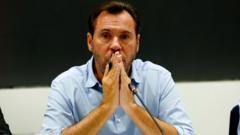
Spain's Transport and Sustainable Mobility Minister Óscar Puente has rejected mounting calls to step down following a catastrophic high-speed rail collision that claimed at least 69 lives earlier this week. Addressing the public amid intensifying political pressure, Puente confirmed that he had placed his position at the disposal of Prime Minister Pedro Sánchez. Sánchez ultimately rejected the resignation, urging his cabinet minister to remain in office and manage the government's response.
The disaster took place near Urda in Toledo province along the heavily traveled high-speed corridor connecting Madrid and Seville. A Renfe passenger service slammed into a stationary Iryo train, causing catastrophic carriage damage and violent derailments. Emergency response teams rushed to the remote section of track to extract survivors, but the death toll quickly climbed as rescue workers cleared the wreckage.
Initial inquiries into the crash have centered on a critical breakdown in automated signaling and train control mechanisms. Puente revealed that the collision occurred following a computerized safety system error coupled with a manual override order. Investigators are currently examining why clearance was issued for a train to proceed past an active red stop signal under circumstances described as inexplicable.
The incident triggered immediate condemnation from railway labor organizations and opposition lawmakers across Spain. Major trade unions, including CSIF and CCOO, demanded Puente’s immediate dismissal and accused transport officials of scapegoating traffic controllers. Union leaders maintained that systemic pressure, staffing shortages, and technical issues must be scrutinized rather than pinning blame solely on front-line personnel.
Public anger has spilled into the streets as grief turned into scrutiny over passenger safety on the national railway grid. Protesters gathered outside the Transport Ministry in Madrid, waving banners and chanting for government accountability and systemic rail safety overhauls. Family members of the victims and passenger advocacy groups have expressed profound shock that such a collision could occur on modern high-speed lines.
Prime Minister Sánchez firmly defended retaining his transport chief, stating that an abrupt departure during a national emergency would be counterproductive and unjust. The prime minister stressed that the administration's primary obligation is to support the victims' relatives and guarantee complete transparency throughout the technical inquiries. He instructed Puente to lead the ministry's internal audit while cooperating unconditionally with judicial authorities.
Spain boasts the second-largest high-speed rail network in the world, which has long been promoted as a pillar of modern European infrastructure. The catastrophe represents one of the deadliest rail disasters in modern Spanish history, casting doubt on recent deregulation and multi-operator integration on shared tracks. Safety experts have warned that rapid commercial expansion must never outpace rigorous technical oversight and signalling validation.
Opposition leaders in parliament have announced plans to convene special parliamentary sessions to grill transport officials on the disaster. Political adversaries argue that ministerial responsibility cannot be sidestepped, warning that public confidence in public transit hinges on honest accountability. Lawmakers have called for an independent commission of inquiry separate from internal ministerial departments.
Technical teams and judicial investigators are now conducting forensic analyses of trackside sensors, dispatch recordings, and onboard data recorders. Rail service between Madrid and Seville remains heavily disrupted as recovery crews work to repair the damaged infrastructure and clear debris. Spanish authorities have pledged that full findings will be made public once the judicial inquiry concludes its assessment.
Primary source: BBC World. Newzly rewrites and structures source reporting for clarity; verify critical details at the original.