Spix’s Macaw Comeback, Made Famous by ‘Rio,’ Collapses Into Controversy
The Brazilian blue parrot that vanished from South American skies more than 30 years ago became a film icon. Smithsonian Magazine reports the bid to bring it back has fallen apart in confusion.
In this piece
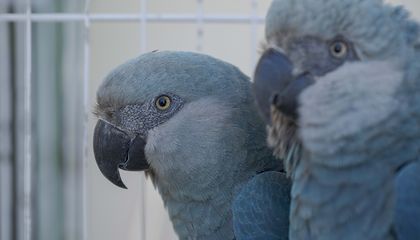
Spix’s macaw, the Brazilian species at the center of the animated film Rio, disappeared from the wild more than three decades ago. Smithsonian Magazine reports…
An effort to bring Spix’s macaw back from the brink has collapsed in controversy and confusion, Smithsonian Magazine reports. The singular blue parrot, a Brazilian bird that starred in the animated hit Rio, disappeared from South American skies more than 30 years ago.
The magazine’s account frames a stark gap between cultural fame and life in the wild. On screen, the species became a global emblem of a rare bird worth saving. In the forests and dry country where it once flew, the magazine says, it has been absent for more than three decades.
Spix’s macaw is described as a beautiful blue bird native to Brazil, distinct enough that a major animated film built its story around it. That visibility turned an obscure parrot into a household name for audiences who had never seen one outside a movie.
The disappearance itself is the starting point of the drama the magazine describes. More than 30 years without the species in South American skies means a generation has grown up knowing the bird mainly through animation and captive memory, not through sightings in its home range.
What followed, according to Smithsonian Magazine, was an attempt to resurrect the species — to reverse a loss that had already stretched across decades. The magazine reports that this effort did not hold. It collapsed, the account says, in controversy and confusion rather than in a clear, completed return to the wild.
The article does not, in the framing available here, set out a single agreed tally of birds, a settled chain of custody, or a final ruling on who was responsible for the breakdown. Those specifics remain inside the magazine’s reporting. What the account does establish is the outcome: a high-profile recovery bid that came apart.
The stakes are larger than one film’s mascot. When a species vanishes from the sky, any later attempt to restore it depends on fragile cooperation among the people who hold the remaining birds, the institutions that claim authority over them, and the habitat they would need. Smithsonian Magazine presents that project as having failed under the weight of dispute and mixed signals.
Public affection can outrun the facts on the ground. Rio introduced millions of viewers to a blue macaw and, by the film’s own premise as the magazine invokes it, to the idea that the species could be pulled back from disappearance. The real-world effort the magazine describes did not deliver that ending.
Confusion after a collapse matters because it leaves the species in limbo. Birds that exist only under human care cannot repopulate a landscape by themselves, and a disputed program is a poor foundation for releasing them. The magazine’s language — controversy and confusion — points to a process that lost its shared story, not to a routine scientific setback with a published timetable.
For Brazil, the bird remains a national symbol caught between pride and absence. It is still “Brazil’s beautiful blue bird” in the magazine’s telling, even as South American skies have lacked it for more than 30 years. Fame has not substituted for a functioning recovery.
What happens next is not settled in the account. Smithsonian Magazine presents the resurrection effort as already collapsed. Any new attempt would have to rebuild trust and clarify control of the remaining birds — steps the reporting describes as mired in dispute, and that this retelling does not invent beyond that record. Until those questions are resolved in public view, Spix’s macaw stays better known as the star of Rio than as a bird restored to the wild.
Primary source: Smithsonian Magazine. Newzly rewrites and structures source reporting for clarity; verify critical details at the original.