Spix’s Macaw Reintroduction Collapses Into Turmoil Decades After Wild Extinction
Decades after vanishing from the wild, the Spix’s macaw—the blue parrot that inspired the hit movie Rio—faces renewed jeopardy as an ambitious international reintroduction effort dissolves into controversy and confusion.
In this piece
More than thirty years after the Spix’s macaw disappeared from South American skies, efforts to resurrect the species have become mired in controversy. The…
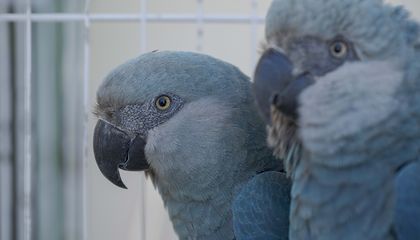
An international campaign to return the critically endangered Spix’s macaw to its native habitat has descended into controversy and disarray. Decades after the striking blue parrot vanished from the Brazilian wild, recent endeavors to re-establish a viable free-flying population have faced severe operational setbacks and disputes among project participants.
The species achieved global recognition as the inspiration for the hit animated film "Rio," which chronicled the cinematic adventure of Blu, a captive bird returned to South America to save his kind. In real life, however, reviving the rare avian species has proven far more contentious than the silver screen narrative suggested, exposing the profound vulnerabilities of modern conservation diplomacy.
The Spix’s macaw disappeared from South American skies more than thirty years ago, driven to near-complete oblivion by decades of heavy poaching, illegal wildlife trafficking, and the widespread destruction of its fragile semi-arid Caatinga forest habitat in northeastern Brazil. By the turn of the millennium, field researchers confirmed that the last known wild individual had vanished, leaving the species officially classified as extinct in the wild.
Following its disappearance in nature, the survival of the species depended entirely on a small, scattered population of captive birds held by private collectors and dedicated breeding centers around the globe. For years, aviculturists and international wildlife specialists worked through intricate genetic pairings and captive-breeding initiatives to gradually rebuild total headcounts from the precipice of total extinction.
The long-planned comeback culminated in high-profile reintroduction releases intended to reseed the birds across protected areas in Brazil. Coordinated between environmental regulators and specialized private conservation organizations, the initiative was initially celebrated as a milestone achievement in global endangered species recovery.
Yet the collaborative framework surrounding the restoration initiative soon began to fracture under the weight of sharp administrative and oversight disputes. Critics and participating entities clashed over operational governance, animal welfare protocols, transparency, and the terms guiding the custody and management of the remaining bird populations.
As disagreements intensified, the comprehensive effort to stabilize and expand the newly released population bogged down in confusion. The institutional rifts have impeded collaborative monitoring and disrupted broader scientific strategies necessary to support the birds as they adapt to the unforgiving wild landscape.
The turmoil surrounding the Spix’s macaw highlights the delicate friction points between governmental wildlife agencies and private conservation organizations. When captive-breeding programs hold a monopoly on an entire species’ genetic heritage, disagreements over proprietary control and oversight can imperil decades of delicate biological progress.
Beyond administrative disputes, reintroducing an animal that has been absent from its native ecology for over a generation presents steep biological hurdles. Captive-bred macaws must learn to forage, find clean water sources, and evade natural predators in an ecosystem that continues to experience climate pressures and landscape degradation.
Moving forward, conservationists emphasize that rescuing the Spix’s macaw requires reconciling conflicting management approaches and re-establishing transparent international cooperation. Without an aligned strategy and renewed institutional trust, the hard-fought progress that brought the little blue macaw back to Brazil risks being undone by human discord.
Primary source: Smithsonian Magazine. Newzly rewrites and structures source reporting for clarity; verify critical details at the original.