NASA Highlights 49 Drill Holes Captured by Curiosity Mars Rover
A newly released NASA collage captures 49 drill holes bored by the Curiosity rover on Mars as of November 2026, marking a major milestone in analyzing subterranean rock samples for ancient planetary secrets.
In this piece
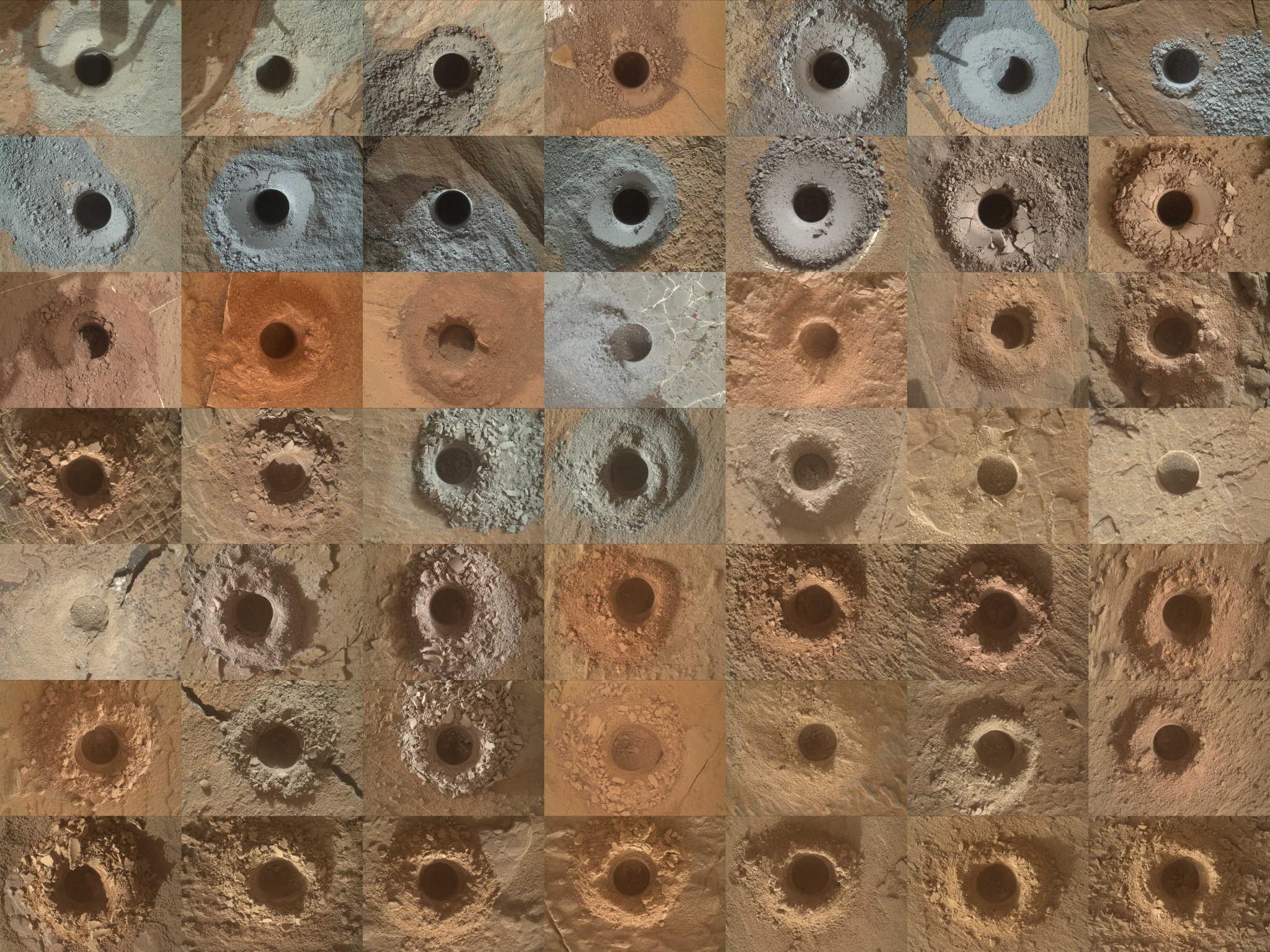
NASA has published a visual collage documenting 49 drill holes created by the Curiosity Mars rover through November 2026. Pulverized rock samples collected by…
NASA has released a new photographic collage documenting 49 drill holes created by the Curiosity Mars rover across its exploration of the Red Planet. Compiled by mission teams and published on November 16, the visual record highlights the rover's ongoing scientific campaign to sample Martian rock formations and examine the geological history preserved beneath the surface.
Each distinct puncture in the Martian bedrock corresponds to an individual rock sample collected directly by Curiosity's specialized drilling system. The drill assembly, mounted at the end of the rover's versatile robotic arm, bores into select rock targets to extract core material from beneath the weathered exterior layers.
Once the drill grinds into a target, it pulverizes the rocky material into a fine powder suitable for sophisticated examination. The robotic arm then delivers these powdered rock samples into scientific instruments housed inside the rover's main chassis, where miniature onboard laboratories carry out detailed chemical and mineralogical analyses.
Reaching a total of 49 drill sites underscores the remarkable endurance and operational longevity of the Curiosity mission on Mars. As of November 2026, the rover continues to navigate rugged terrain, systematically identifying promising rock strata that offer clues about ancient environmental conditions and the planet's transition over billions of years.
Surface sampling remains one of the primary methods planetary scientists rely upon to understand whether Mars could have ever supported microbial life. By analyzing pulverized interior rock samples rather than solely observing dust-covered surface layers, researchers can detect key elemental building blocks and decipher past water activity that shaped ancient Martian landscapes.
Operating a mechanical drilling mechanism across years of extreme temperature fluctuations and abrasive Martian dust presents formidable engineering demands. The robotic arm must execute delicate maneuvers across varying rock densities, ensuring that drilling hardware functions reliably without jamming or damaging the analytical payloads tucked inside the rover's body.
The newly assembled collage provides researchers and the public with a comprehensive comparative snapshot of the diverse geological formations Curiosity has encountered. Differences in rock coloration, texture, and structural hardness across the 49 drilled sites illustrate the complex stratigraphy and shifting sedimentary regimes present on Mars.
Curiosity's ongoing sampling campaign complements broader international efforts to investigate the Red Planet's habitability and evolutionary timeline. The data harvested from its internal instruments helps ground-truth orbital observations and informs future mission architectures aimed at deeper planetary exploration.
Looking ahead, science teams continue to guide Curiosity toward new geological targets to expand its catalog of drilled samples. As mission controllers analyze the latest findings delivered by the rover's belly instruments, the milestone collection of 49 drill sites stands as a testament to sustained robotic exploration and the quest to unlock Mars' ancient secrets.
Primary source: NASA Breaking News. Newzly rewrites and structures source reporting for clarity; verify critical details at the original.