science·New York·Sullivan County
Birds Killed in Fire at Major US Foie Gras Farm in Upstate New York
A devastating fire tore through Hudson Valley Foie Gras in Sullivan County, New York, killing an unconfirmed number of birds while hundreds of young hatchlings were saved amid ongoing scrutiny over industry welfare.
In this piece
A major multi-alarm fire has destroyed key buildings at Hudson Valley Foie Gras in Sullivan County, New York, killing numerous birds. While firefighters rescued…
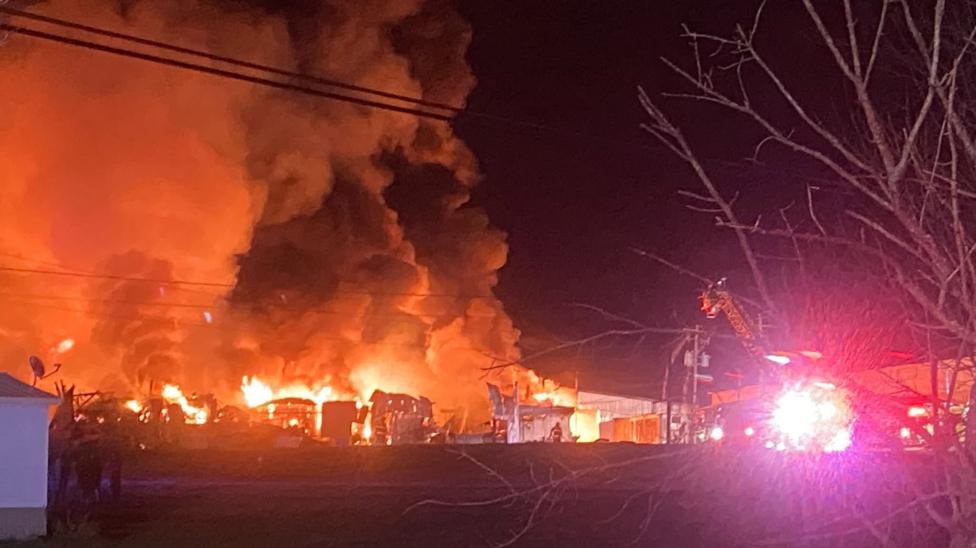
A fast-moving, multi-alarm fire tore through Hudson Valley Foie Gras in upstate New York early Wednesday, destroying several operational buildings and killing an undetermined number of birds. Responding emergency crews and facility workers managed to pull hundreds of young birds and newly hatched chicks from the advancing flames. Local authorities confirmed that while many juvenile birds were saved, heavy fire conditions prevented the rescue of animals in adjacent housing units.
The blaze erupted shortly after 1 a.m. at the sprawling agricultural complex in Mongaup Valley, a hamlet situated within Sullivan County. Approximately 200 first responders representing nearly 40 fire departments across Sullivan County, surrounding New York districts, and neighboring Pennsylvania were dispatched to the scene. Firefighters confronted intense flames that generated heavy plumes of smoke and ash, prompting safety alerts in neighboring communities.
Emergency officials reported that the fire spread rapidly through the metal-clad, timber-framed agricultural buildings, leaving major sections of the complex in ruins. Water tankers had to be coordinated across multiple rural staging areas to maintain pressure against the expanding blaze. No injuries or fatalities were reported among farm personnel or responding emergency crews.
While the rescue of hundreds of young birds provided a measure of relief, officials acknowledged substantial losses among the mature ducks and geese housed on site. The fast-moving nature of the fire left little time to evacuate animals from the most heavily affected barns. An exact accounting of the bird casualties remains pending as search and recovery efforts proceed.
Hudson Valley Foie Gras is widely recognized as one of only two major commercial foie gras production facilities operating in the United States. Established in Sullivan County, the farm supplies high-end restaurants, boutique butcher shops, and specialty distributors across the country with duck products. A disruption of this magnitude at the facility represents a severe blow to domestic commercial distribution.
The disaster comes as commercial foie gras production faces sustained ethical, legal, and regulatory scrutiny worldwide. The specialty delicacy is traditionally produced through gavage, a practice involving the controlled force-feeding of ducks and geese to enlarge their livers. Animal protection organizations have long campaigned against the method, arguing that the housing and feeding regimens cause unnecessary distress and physical harm.
Those welfare concerns have previously translated into significant legislative battles across multiple American cities and states. California enforced a statewide prohibition on the sale and production of foie gras, which withstood years of court challenges from producers. In New York, local farmers have waged ongoing legal fights against a municipal ban passed by New York City lawmakers seeking to bar sales in the metropolitan market.
Because commercial production in the United States is overwhelmingly concentrated in this single region, the physical destruction at the Bethel-area farm carries immediate economic ramifications for the niche luxury meat sector. Beyond supply constraints, the incident is likely to renew public debate concerning fire safety infrastructure and welfare oversight at intensive livestock facilities. Industry observers note that recovery will depend heavily on the survival of breeding stock and operational rebuilding capacity.
Sullivan County fire investigators, alongside local law enforcement officials, have initiated a formal inquiry to determine how the blaze originated. Emergency personnel remained at the property to monitor smoldering debris and secure structural remnants against secondary flare-ups. Farm operators and agricultural representatives have not yet released a comprehensive assessment regarding the timeline for rebuilding or resuming full operations.
Primary source: BBC Science. Newzly rewrites and structures source reporting for clarity; verify critical details at the original.