NASA Honors Stennis Space Center Workforce at Annual Ceremony
NASA recognized Stennis Space Center employees during an Honor Awards ceremony on Nov. 18, with leadership highlighting the Mississippi workforce's pivotal contributions to the Artemis lunar exploration initiative.
In this piece
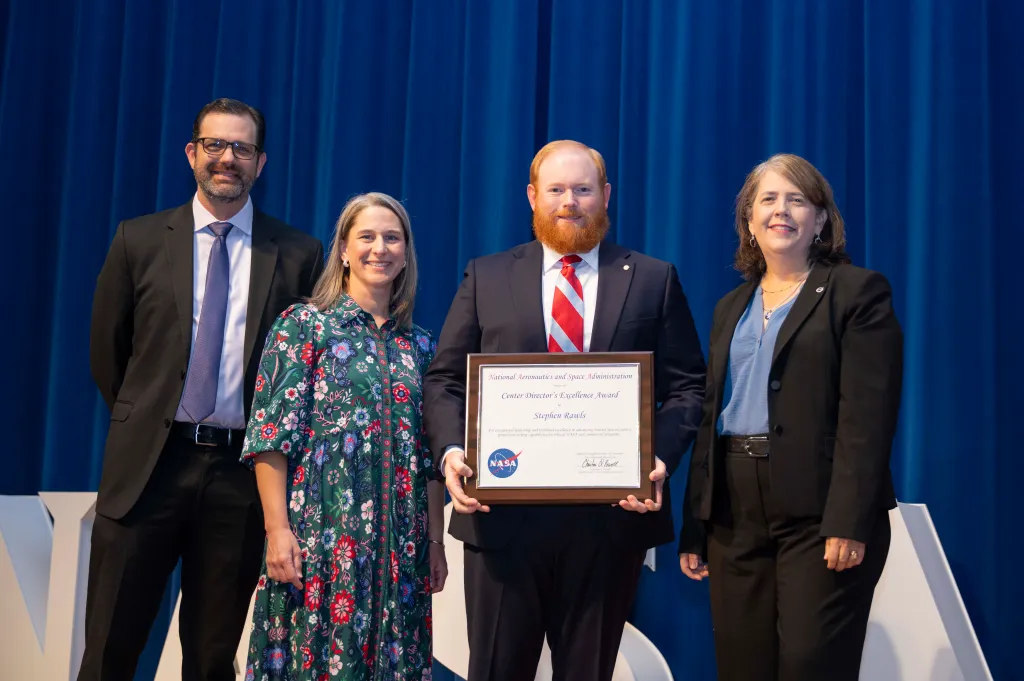
NASA employees at the Stennis Space Center were honored on Nov. 18 for outstanding contributions to the agency's mission. Center Director Christine Powell and…
NASA personnel and contractor teams at the John C. Stennis Space Center were formally recognized for their professional achievements during the facility's Honor Awards ceremony on Nov. 18. The gathering honored exceptional contributions made by center staff members toward the federal space agency's ongoing exploration priorities and scientific missions. Center officials highlighted that individual and group efforts across technical, operational, and administrative disciplines contributed directly to advancing major aerospace milestones.
The honors were presented jointly by Christine Powell, director of NASA Stennis, and Jeremy Parsons, the agency's Artemis program manager. Both officials praised the workforce for maintaining rigorous performance standards and operational discipline across complex testing environments. Their remarks emphasized the dedication required to manage specialized facilities that support the nation's most demanding spaceflight endeavors.
Parsons plays a central role within the agency, holding responsibility for the management and oversight of NASA's initiative to return astronauts to the Moon under the Artemis banner. His participation in the ceremony underscored the strategic link between regional test operations and national exploration goals. By attending the event in person, program leadership reaffirmed the significance of the Mississippi center in supporting the hardware and systems needed for deep-space missions.
Situated near Bay St. Louis, Mississippi, Stennis Space Center has long served as NASA's premier rocket engine and propulsion test complex. The facility's specialized stands and expansive buffer zone provide the unique infrastructure necessary to evaluate high-thrust rocket engines safely. Teams stationed at the center have tested propulsion hardware dating back to the Apollo program and the Space Shuttle era, creating an established institutional foundation for current flight programs.
The annual Honor Awards represent one of the agency's most prestigious institutional recognitions for civil servants and industry partners. The ceremony acknowledges exceptional performance across diverse fields, including engineering ingenuity, program leadership, workplace safety, and mission assurance. These accolades serve to distinguish personnel whose sustained technical rigor helps mitigate flight risks and advance agency directives.
Workforce recognition is viewed across NASA as an essential element for sustaining institutional knowledge and operational focus. Complex ground testing and infrastructure maintenance require continuous coordination between propulsion technicians, instrumentation specialists, and project coordinators. Leadership emphasized that the collective expertise housed at the Gulf Coast installation remains vital to keeping multi-center programs aligned and mission-ready.
The event took place amid an active operational schedule for the Artemis program, which relies heavily on propulsion validation performed at Stennis. Rigorous test campaigns for flight engines and rocket stages provide the critical verification data required before crewed vehicles launch beyond low Earth orbit. As mission timelines evolve, the analytical and technical outputs generated by Stennis specialists directly inform flight readiness assessments across the agency.
Beyond highlighting individual accomplishments, the ceremony emphasized the collective responsibility shared by civil servants and commercial aerospace partners. Agency officials reiterated that complex spaceflight initiatives depend on seamless collaboration between headquarters program managers and field center personnel. The shared recognition reflected how cross-disciplinary teams contribute to overarching agency priorities through day-to-day diligence on the test stands.
Looking ahead, the Stennis workforce is slated to continue its active support of upcoming Artemis milestones and advanced propulsion development. Center leadership indicated that maintaining a skilled and motivated workforce will remain critical as testing campaigns expand to support long-term lunar exploration architecture. As NASA moves toward its next phases of exploration, the teams recognized in Mississippi will continue playing an indispensable role in powering the journey forward.
Primary source: NASA Breaking News. Newzly rewrites and structures source reporting for clarity; verify critical details at the original.