Tiny California Spider Named After Stephen Colbert Has Genome 50% Larger Than a Human's
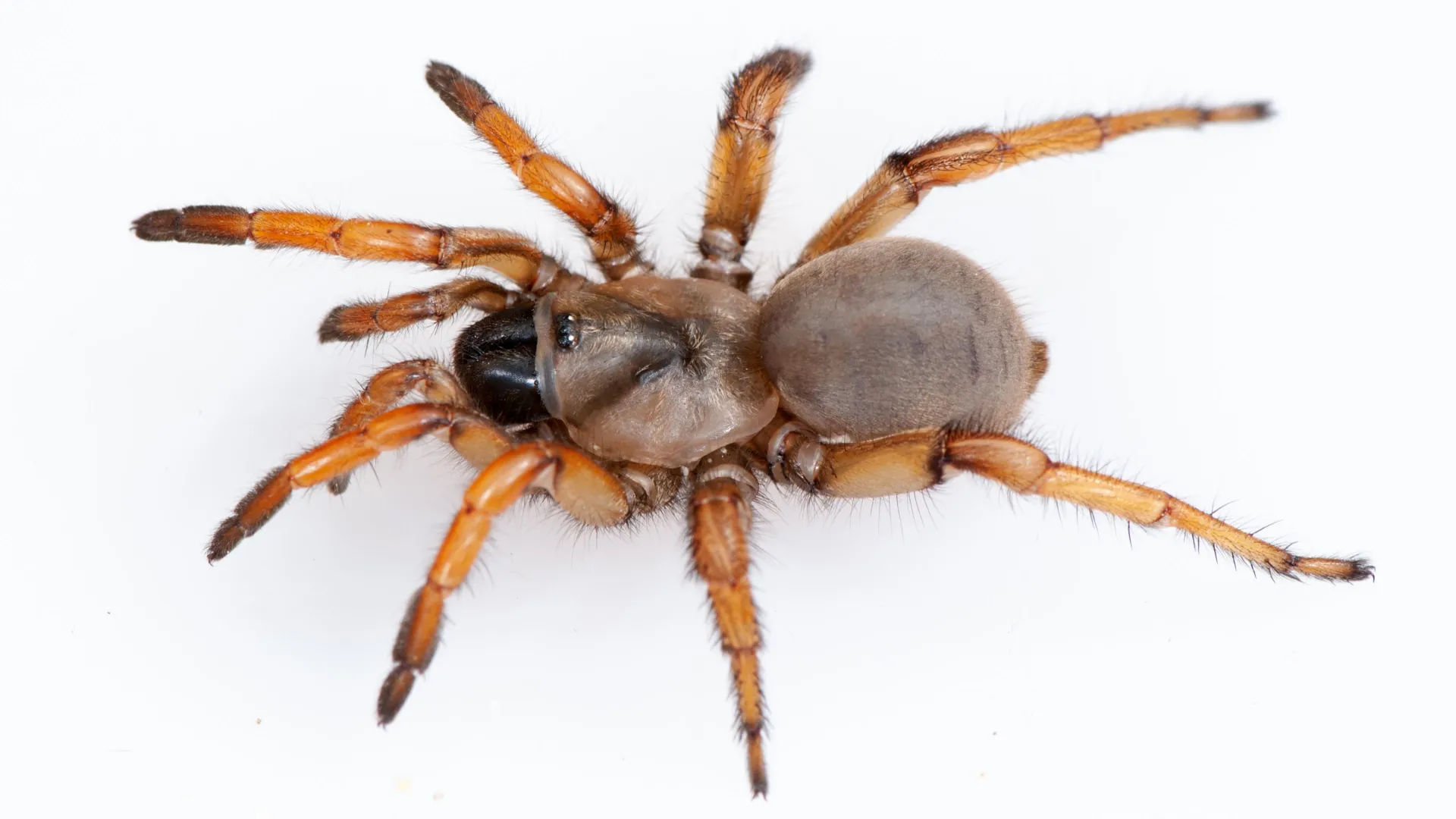
A tiny California trapdoor spider named after Stephen Colbert carries a genome 50 percent larger than a human's, containing 4.6 billion DNA base pairs and offering fresh clues about spider evolution.
In this piece
Scientists have discovered that a tiny California trapdoor spider named after Stephen Colbert possesses a massive genome roughly 50 percent larger than a…
A miniature trapdoor spider native to California and named in honor of television host Stephen Colbert possesses a genetic blueprint roughly 50 percent larger than that of a human being. Researchers sequencing the arachnid's DNA revealed that despite measuring only about the size of a quarter, the creature carries an unexpectedly massive genetic architecture.
The scientific investigation determined that the tiny spider's genome spans approximately 4.6 billion DNA base pairs organized across 52 chromosomes. In comparison, the human genome comprises slightly over three billion base pairs distributed across 46 chromosomes, highlighting the striking density and scale of the spider's biological code.
The sheer scale of this genetic package presents a fascinating contrast with the animal's modest physical stature. While large genomes are occasionally documented across various branches of the tree of life, finding such an expansive code within a diminutive trapdoor spider challenges conventional assumptions linking organism size or anatomical complexity to genomic scale.
The arachnid, known for its secretive underground lifestyle typical of trapdoor spiders, represents one of California's uniquely adapted native species. Its naming after Stephen Colbert originally drew public interest to regional invertebrate biodiversity, but the latest genetic analysis shifts the focus squarely onto its evolutionary biology.
According to the findings, the creature's expansive chromosomal makeup offers surprising clues into the broader history of spider evolution. Genomic size differences across arachnid lineages can point toward historical gene duplications, structural rearrangements, or the accumulation of non-coding repetitive sequences over millions of years.
Understanding how such a vast sequence evolved helps evolutionary biologists untangle the mechanisms that govern chromosome structure and genetic divergence in arthropods. The discovery indicates that arachnid genomes may harbor unexpected complexity and plasticity that previous models failed to anticipate.
Trapdoor spiders are renowned for their burrowing habits, specialized silk doors, and prolonged lifespans spent largely secluded from predators and extreme weather. Analyzing the genetic blueprint of these resilient invertebrates could shed light on how genomic architecture correlates with ecological specializations and physiological longevity.
The revelation of 52 chromosomes also raises intriguing questions regarding how the species regulates such an extensive set of genetic instructions without cellular inefficiency. Researchers often study organisms with expanded chromosome counts to decipher how genetic material is packaged, transcribed, and maintained across generations.
The discovery reinforces a well-known scientific principle that physical simplicity or diminutive size does not equate to genomic brevity. Invertebrates continue to present some of the most intricate and puzzling genomic landscapes documented by modern sequencing technology.
Looking ahead, scientists anticipate that further comparative studies across related trapdoor spider species will help clarify whether this outsized genome is unique to this particular California lineage or shared among closely related taxa. Detailed functional analyses are expected to pinpoint the specific genomic regions driving this remarkable expansion and provide deeper insights into spider evolutionary history.
Primary source: ScienceDaily. Newzly rewrites and structures source reporting for clarity; verify critical details at the original.