Understanding the Paris Agreement and Why Limiting Warming to 1.5C Matters
Nearly a decade after its adoption, the 2015 Paris Agreement remains the foundation of global efforts to halt rising temperatures, centering international climate diplomacy on the critical threshold of 1.5 degrees Celsius.
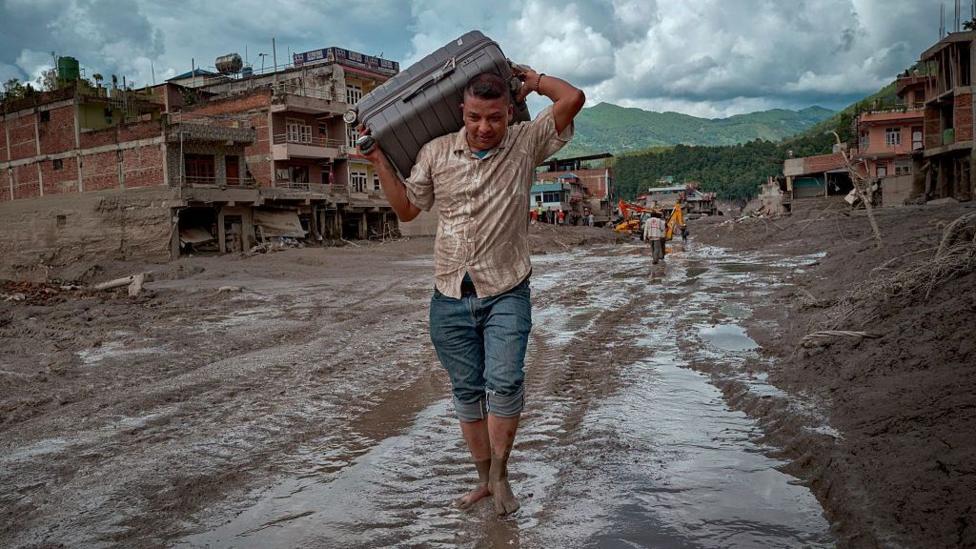
The Paris Agreement, adopted in late 2015, stands as the cornerstone of contemporary international commitments to curb rising global temperatures. Framed through multilateral consensus, the treaty brought countries together under a common pledge to limit the advance of global climate change. In an analysis of the pact, BBC Science highlighted the enduring debate over the treaty's core objective of curbing global temperature increases.
At the heart of the agreement is an ambition to limit the rise in global average temperatures to well below 2 degrees Celsius above pre-industrial levels. Beyond that baseline, participating nations also agreed to pursue concerted efforts to restrict that rise to 1.5 degrees Celsius. The tighter 1.5C benchmark has increasingly become the primary reference point in scientific evaluations and policy negotiations worldwide.
Understanding why the 1.5C threshold carries such weight requires examining how incremental warming affects planet-wide systems. Scientific assessments have repeatedly shown that surpassing 1.5C substantially elevates the severity of extreme weather events, sea level rise, and ecological strain. Even fractions of a degree of additional warming can translate into broader systemic shifts across ecosystems and vulnerable human communities.
The framework established in 2015 operates on nationally determined pledges, wherein individual states outline their respective emissions pathways. Under this arrangement, governments submit updated targets over designated cycles, creating a diplomatic mechanism designed to encourage greater ambition over time. The approach was crafted to foster universal participation while respecting differing national capabilities and economic profiles.
Transitioning from diplomatic declarations to measurable emissions curbs has presented persistent challenges for participating governments. Global greenhouse gas emissions have continued to test international carbon accounting and mitigation strategies across diverse industrial sectors. Policy analysts note that reconciling immediate economic priorities with long-term emissions caps requires structural transformations in energy generation, transport, and land management.
The urgency surrounding the 1.5C target also stems from the risk of triggering irreversible environmental feedback loops. Experts emphasize that warmer ocean temperatures, thawing permafrost, and deteriorating polar ice sheets pose cascading risks that become significantly harder to manage beyond this threshold. Consequently, maintaining the 1.5C goal serves as an essential guardrail against the most dangerous trajectories of atmospheric change.
Beyond target setting, international negotiations under the Paris umbrella involve questions of financial mobilization and technological transfer. Lower-income countries and island nations, which often contribute the least to aggregate emissions, face the steepest burdens from accelerating climate impacts. Multilateral discussions continue to deliberate how wealthier economies can support adaptation and clean development in regions experiencing disproportionate vulnerability.
Public monitoring and regular accountability mechanisms remain fundamental to gauging whether global collective action is keeping pace with the treaty's ambitions. Independent observers and scientific bodies closely track national policy implementation against promised reductions. These periodic reviews provide governments and international institutions with transparent assessments of existing shortfalls and opportunities to accelerate progress.
Looking ahead, the international community faces a narrow operational window to align actual emissions pathways with the 1.5C ceiling. While the Paris Agreement established the architecture for cooperative climate policy, translating that roadmap into sustained emissions cuts demands persistent political commitment across all economic sectors. Ongoing diplomatic gatherings and scientific updates will determine how effectively the global pact manages warming risks in the decades ahead.
Primary source: BBC Science. Newzly rewrites and structures source reporting for clarity; verify critical details at the original.