How the High-Profile Effort to Save Brazil’s Spix’s Macaw Unraveled Into Crisis
An ambitious international campaign to revive Brazil's extinct-in-the-wild Spix's macaw has descended into turmoil following viral disease outbreaks, police raids, and deep institutional rifts.
In this piece
Decades after vanishing from the wild, the Spix's macaw was returned to Brazil's skies in a celebrated captive-breeding project. Today, that effort has…
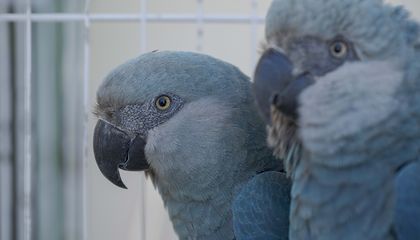
An international initiative once celebrated for resurrecting Brazil's iconic Spix's macaw from extinction in the wild has unraveled amid escalating regulatory disputes, disease outbreaks, and institutional turmoil. The vibrant blue parrot, which captured global attention as the real-world inspiration for the animated film "Rio," had vanished from South American skies decades ago before being reintroduced through an ambitious captive-breeding program.
The species disappeared from its native Caatinga dry forest in northeastern Brazil after decades of relentless poaching, wildlife trafficking, and habitat destruction decimated wild populations. By the early 2000s, the bird was declared extinct in the wild, surviving solely through scattered captive collections maintained by aviculturists and breeding centers across the world.
In response, Brazilian conservation authorities embarked on an unprecedented partnership with international organizations, most notably Germany's Association for the Conservation of Threatened Parrots. The collaborative effort invested millions of dollars into intensive breeding, veterinary research, and local release enclosures, eventually flying dozens of captive-bred macaws back to Brazil to prepare them for native release.
In 2022, conservationists celebrated what was heralded as a historic triumph when the first captive-bred Spix's macaws were officially released into the skies of Bahia. For scientists, wildlife advocates, and local communities, the sight of the vivid blue birds soaring over native scrubland appeared to prove that modern science could successfully reverse a species' extinction in the wild.
That apparent success, however, soon descended into acute crisis as operational and ethical rifts deepened between Brazilian wildlife regulators and their German partners. Tensions intensified drastically after avian circovirus, a dangerous pathogen causing psittacine beak and feather disease, was detected within the captive population, posing an existential health threat to the fragile flock.
The breakdown in cooperation culminated in direct enforcement action by Brazil's environmental agency, ICMBio, accompanied by federal police who raided the breeding facility and seized dozens of birds amid allegations of biosecurity failures and administrative violations. The dramatic intervention severed the key public-private alliance underpinning the program, throwing daily animal care and monitoring operations into disarray.
Further friction emerged within the international conservation community over subsequent transfers of the rare birds to private foreign collections, including an animal facility in India. Renowned ornithologists and global watchdogs raised urgent questions regarding governance, noting that critically endangered wildlife held in trust for public recovery efforts had been moved without broad scientific consensus.
The project's sudden decline highlights the immense vulnerability of captive reintroduction programs when scientific execution is undermined by diplomatic conflicts and fractured oversight. Conservation experts stress that achieving successful captive reproduction is meaningless if veterinary quarantine standards and multi-agency transparency cannot be reliably maintained.
Brazilian authorities are now working to stabilize the remaining birds in captivity and evaluate the health of those currently flying free in the Caatinga. As administrative investigations proceed and international oversight bodies review the fallout, the long-term survival of the Spix's macaw once again hangs in precarious balance.
Primary source: Smithsonian Magazine. Newzly rewrites and structures source reporting for clarity; verify critical details at the original.